The World Time function is one of Patek Philippe's signature complications. Developed in the 1930s by watchmaker Louis Cottier (1894–1966), it reflects the expertise of a master watchmaker who collaborated with Patek Philippe throughout his career.
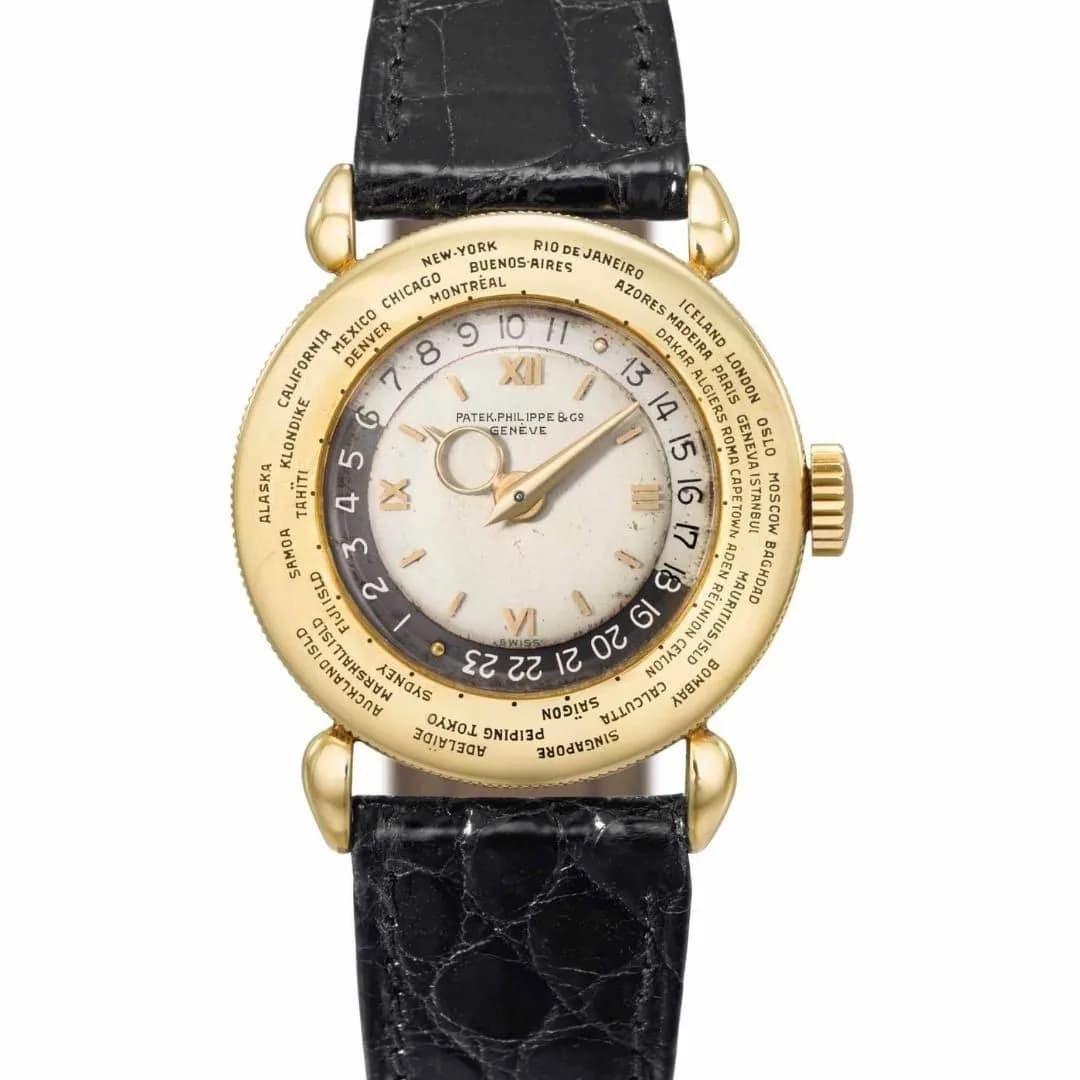
With a diameter of 31 mm, the first generation of Patek Philippe World Time watches, known as "Heures Universelles", was introduced under reference 1415. Produced from 1939 to 1954, primarily in yellow gold and, to a lesser extent, rose gold, its distinctive feature was the names of 41 cities engraved directly onto the rotating bezel.
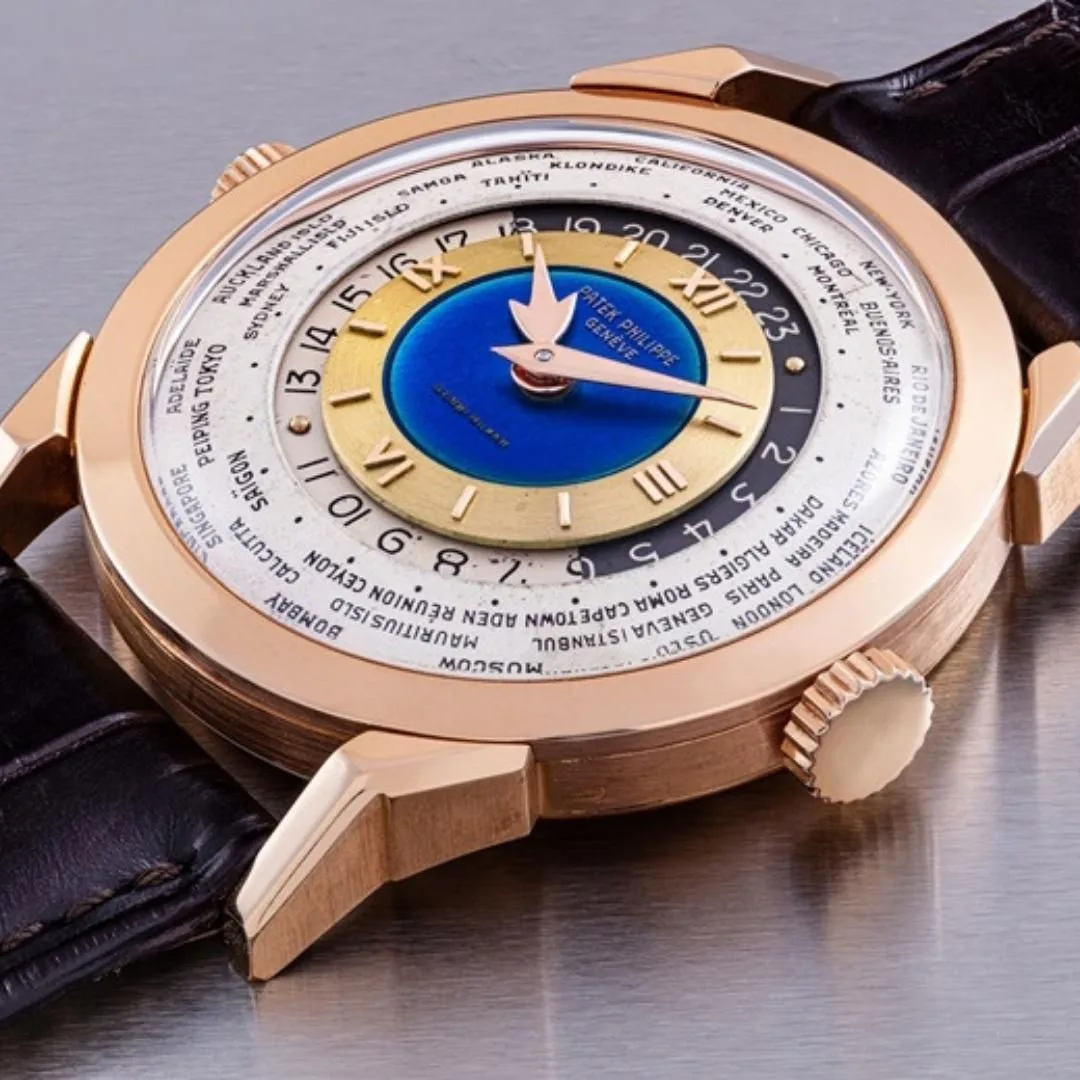
The second generation of Patek Philippe World Time watches was introduced in 1954 under reference 2523. Instantly recognisable by its dual-crown configuration, it featured an increased case diameter of 36 mm. With each creation personally overseen by Louis Cottier, production remained extremely limited, closer to traditional craftsmanship than industrial watchmaking.
The city names were now displayed on a rotating disc integrated into the dial. Production ceased in 1965, around the time of Louis Cottier's passing, and Patek Philippe would go nearly four decades without a World Time complication in its catalogue. Remarkably, it was not until 2000 that the manufacture reintroduced this complication to its collections with the launch of reference 5110.
Introducing reference 5110P
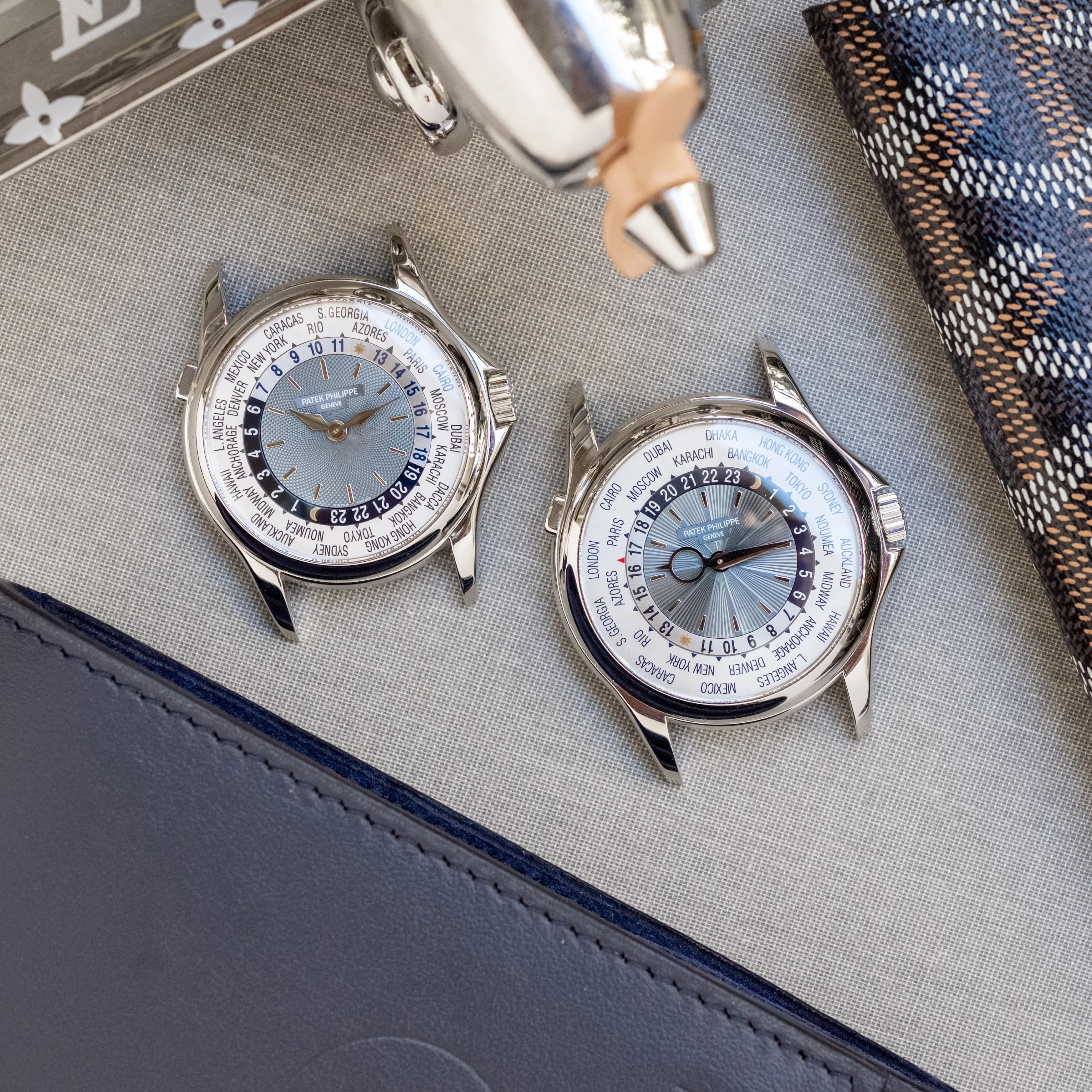
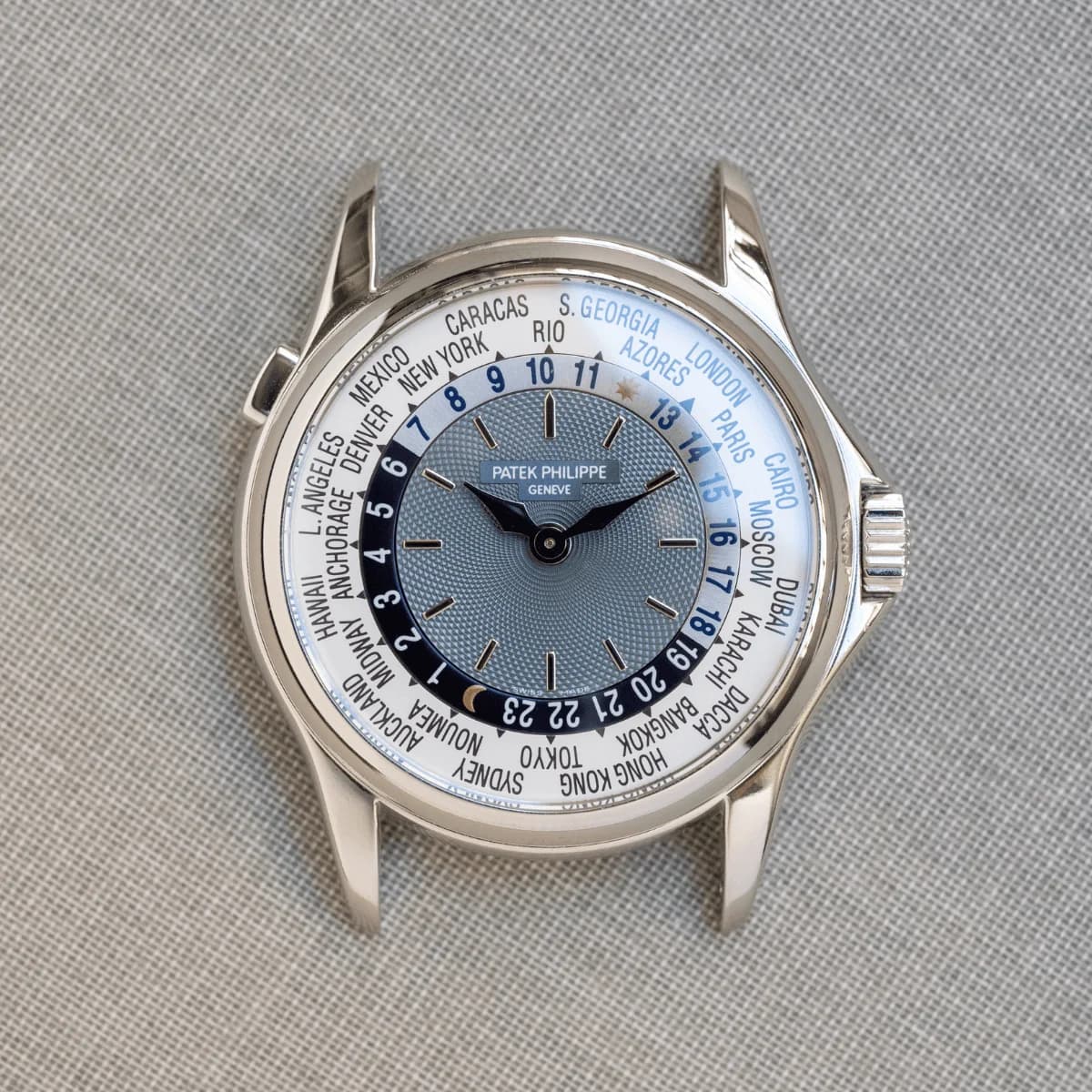
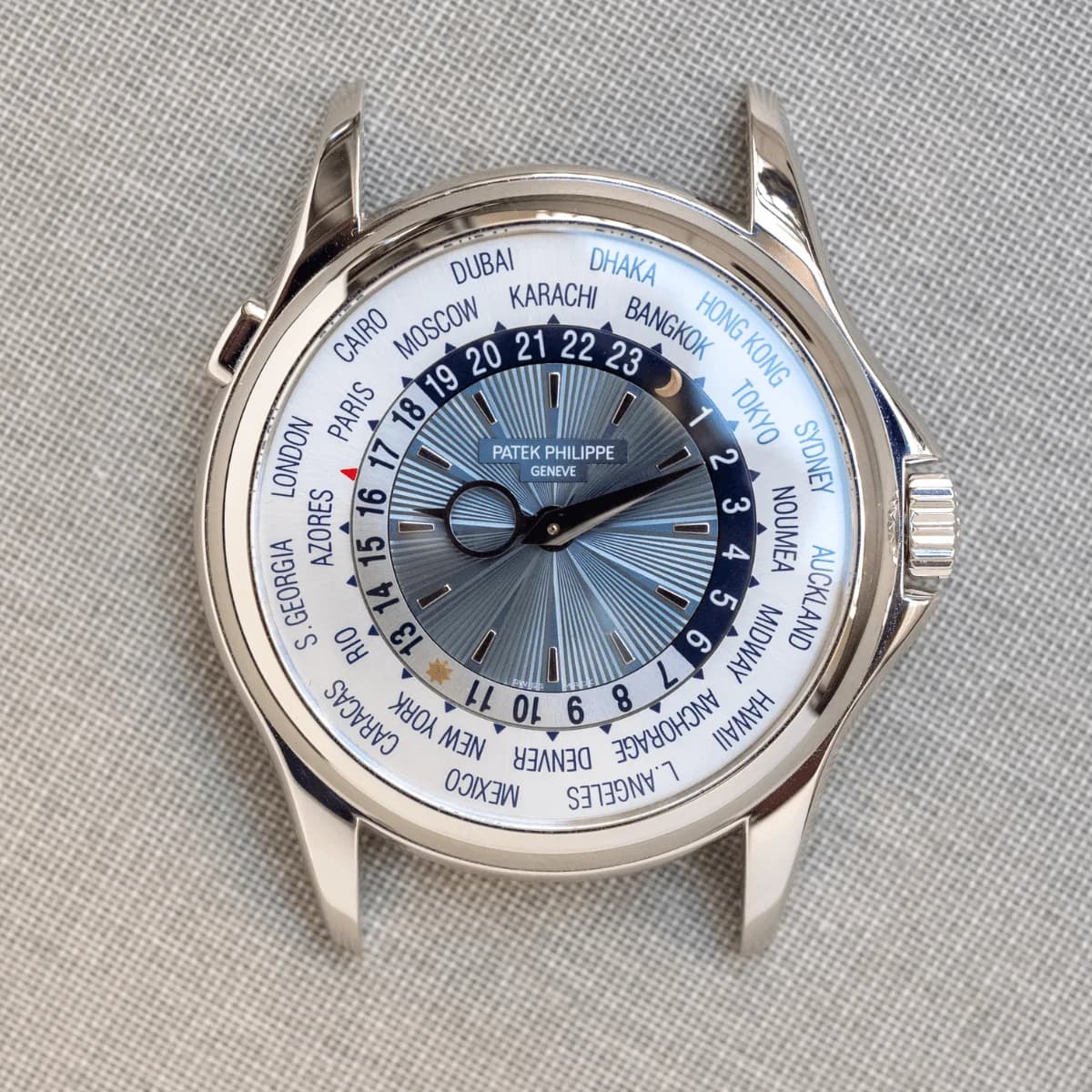
The 5110P was the first modern Patek Philippe World Time reference to be produced as a regular production model. Available in white gold, yellow gold, rose gold and platinum, its 37 mm case diameter makes it suitable for virtually any wrist size.
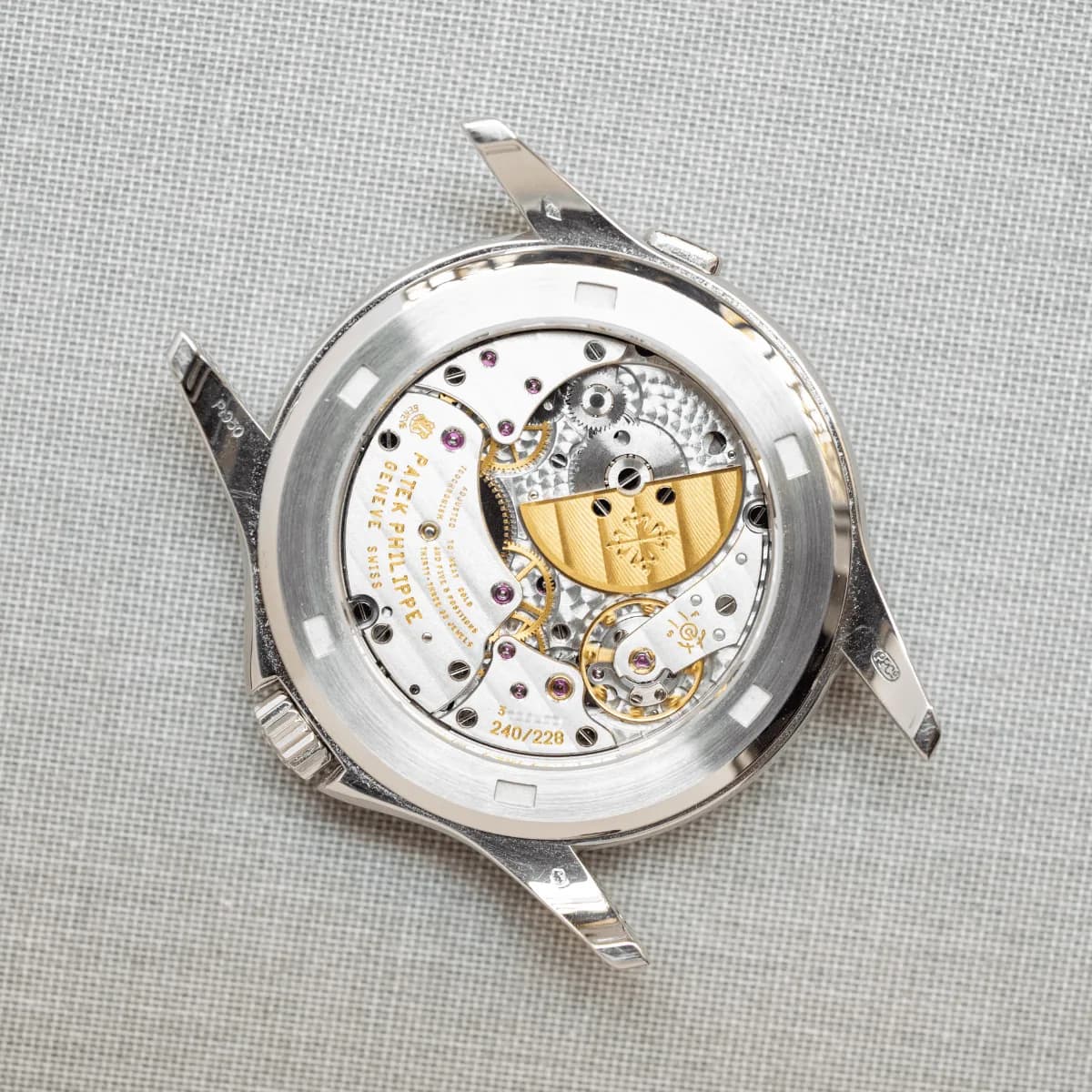
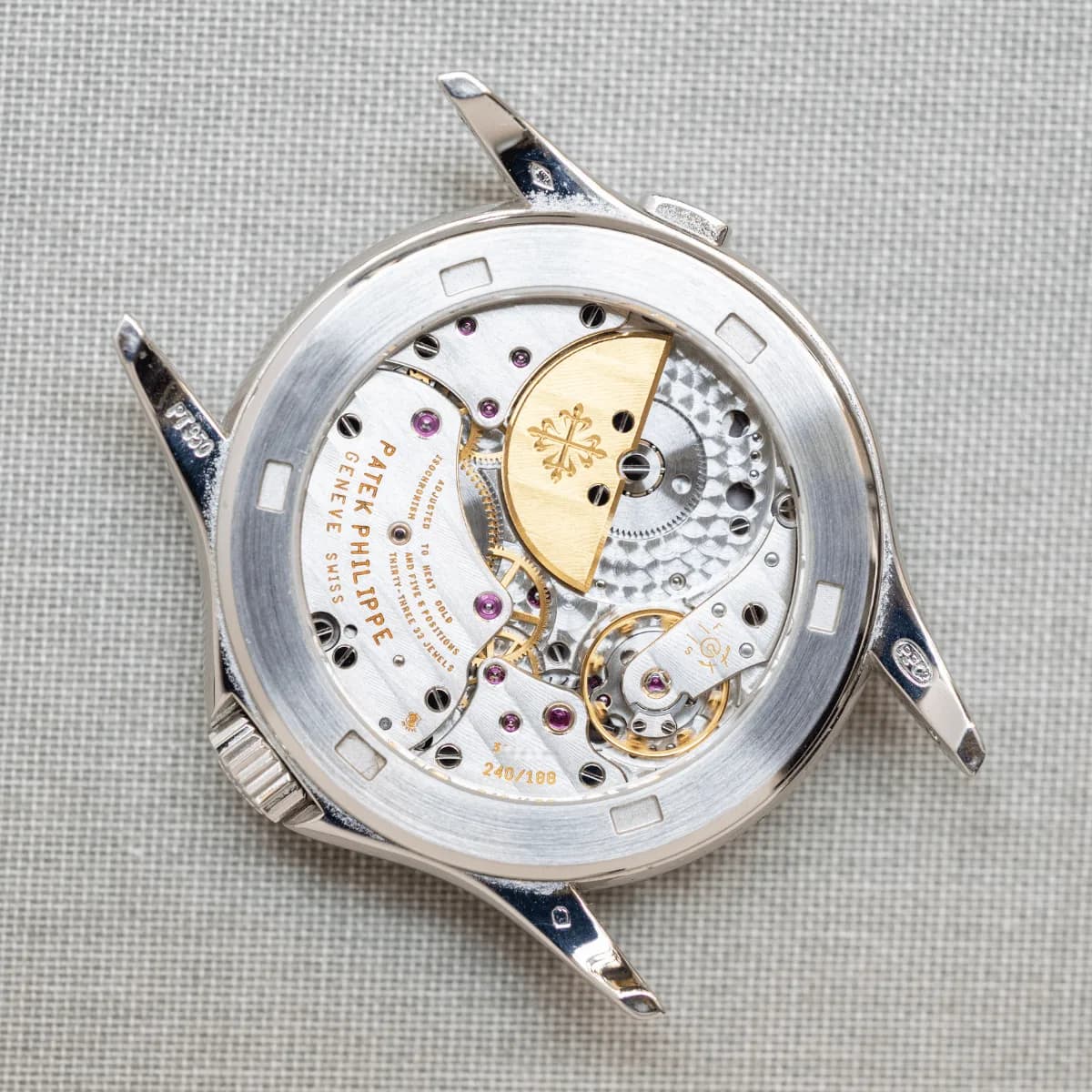
Reference 5110 introduced automatic winding while retaining a relatively slim movement (based on Patek Philippe's calibre 240), thanks to a micro-rotor integrated into the thickness of the movement, which can be admired through the sapphire crystal caseback.
This new generation of World Time watches introduced an ingenious system, patented by Patek Philippe, allowing the hour hand to be adjusted with a simple press of a push-piece integrated into the case at 11 o'clock.
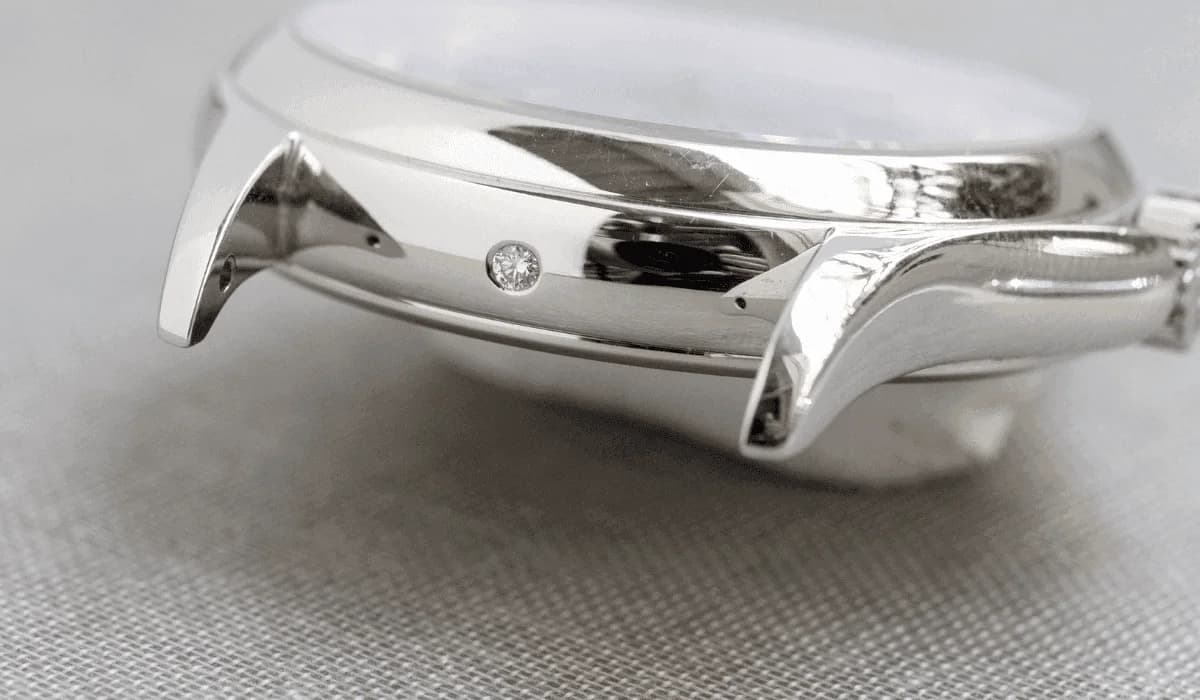
The platinum reference features a distinctive two-tone ice-blue guilloché dial, creating a superb contrast. Another characteristic of Patek Philippe's platinum cases is a discreet diamond set into the caseband at 6 o'clock, theoretically visible only to the watch's owner.
The 5110P remained in production for six years before being replaced by reference 5130P in 2006.
Patek Philippe World Time 5130P
The 5130P was introduced to the Patek Philippe collection in 2006. It stands apart with its larger 39.5 mm case diameter (compared to 37 mm for the 5110P), a sunburst guilloché dial, and distinctive Observatory-style hands, lending a more modern touch while recalling those of reference 1415, Patek Philippe's first World Time watch.
The larger case allows for a more spacious dial layout, with greater separation between the city names, addressing some of the criticisms levelled at the 5110P.
Patek Philippe 5110P vs. 5130P: Which One Should You Choose?
Case diameter, wrist presence, hands… Although aesthetically very similar, these two references differ in several ways worth considering. Some may find one more legible than the other, while others may prefer the 5110P for its more restrained proportions or the 5130P for its greater wrist presence.
We do not claim to have the definitive answer when choosing between these two remarkable references, but we hope to have provided some useful insights to help guide your decision.