41WATCH has surrounded itself with the safest and fastest providers to transport the most precious goods. Delivery is insured and secure.
All our watches are guaranteed to be 100% genuine.
All our watches have been inspected and appropriately serviced by our in-house watchmakers and are guaranteed for one year.
41Watch has established privileged partnerships with financial providers to offer you taylor made financing solutions.
Royal Pop: Why the Swatch x Audemars Piguet collaboration is already causing controversy
5 min read

It’s the watchmaking news everyone is talking about. Over the past few weeks, Swatch began unveiling a series of cryptic teasers hinting at a collaboration with a (very) major name in horology. Many refused to believe it, as the announcement seemed almost unreal, yet it is now official: the next collaboration between the specialist in accessible timepieces and a high-end watchmaker will be with none other than Audemars Piguet. Shockwaves and panic among purists of the Le Brassus manufacture — and understandably so. While a collaboration with another brand from the Swatch Group would hardly have surprised anyone, seeing Swatch partner with one of the prestigious members of the “Holy Trinity” feels, at first glance, completely unexpected.
We already know that the watch will feature a hand-wound mechanical movement, the Sistem51 previously used in the collaboration with Blancpain.
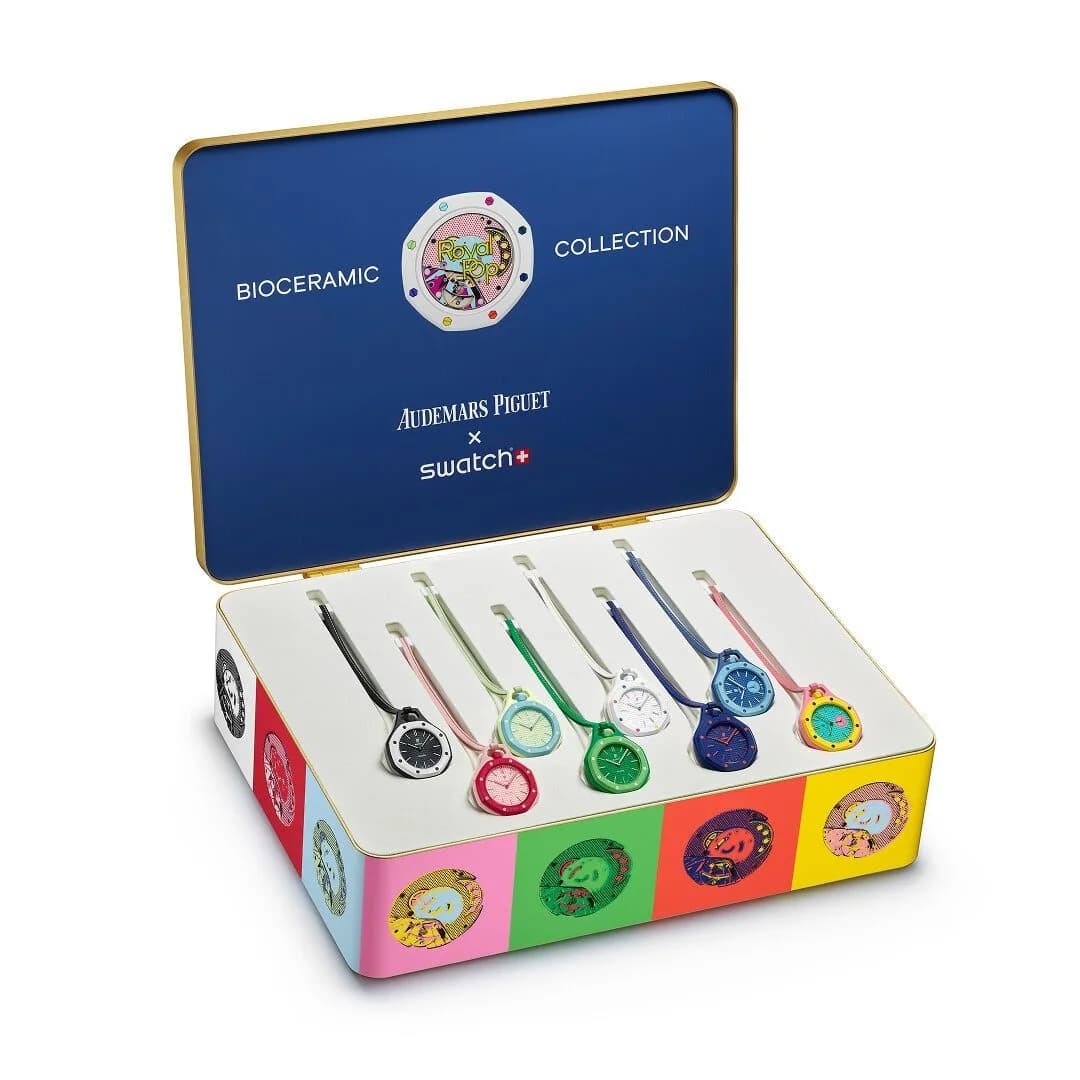
Long kept mysterious, the cord teased by the brand was finally spotted in a new video released by Swatch, confirming that the watch can be worn around the neck. It remains to be seen whether Swatch will also introduce a hybrid system allowing it to be worn on the wrist as well — a mystery the brand is deliberately keeping vague ahead of the official launch on May 16. Available in eight different colorways, the collection features two distinct dial layouts: one displaying hours and minutes only, and another equipped with a small seconds subdial.
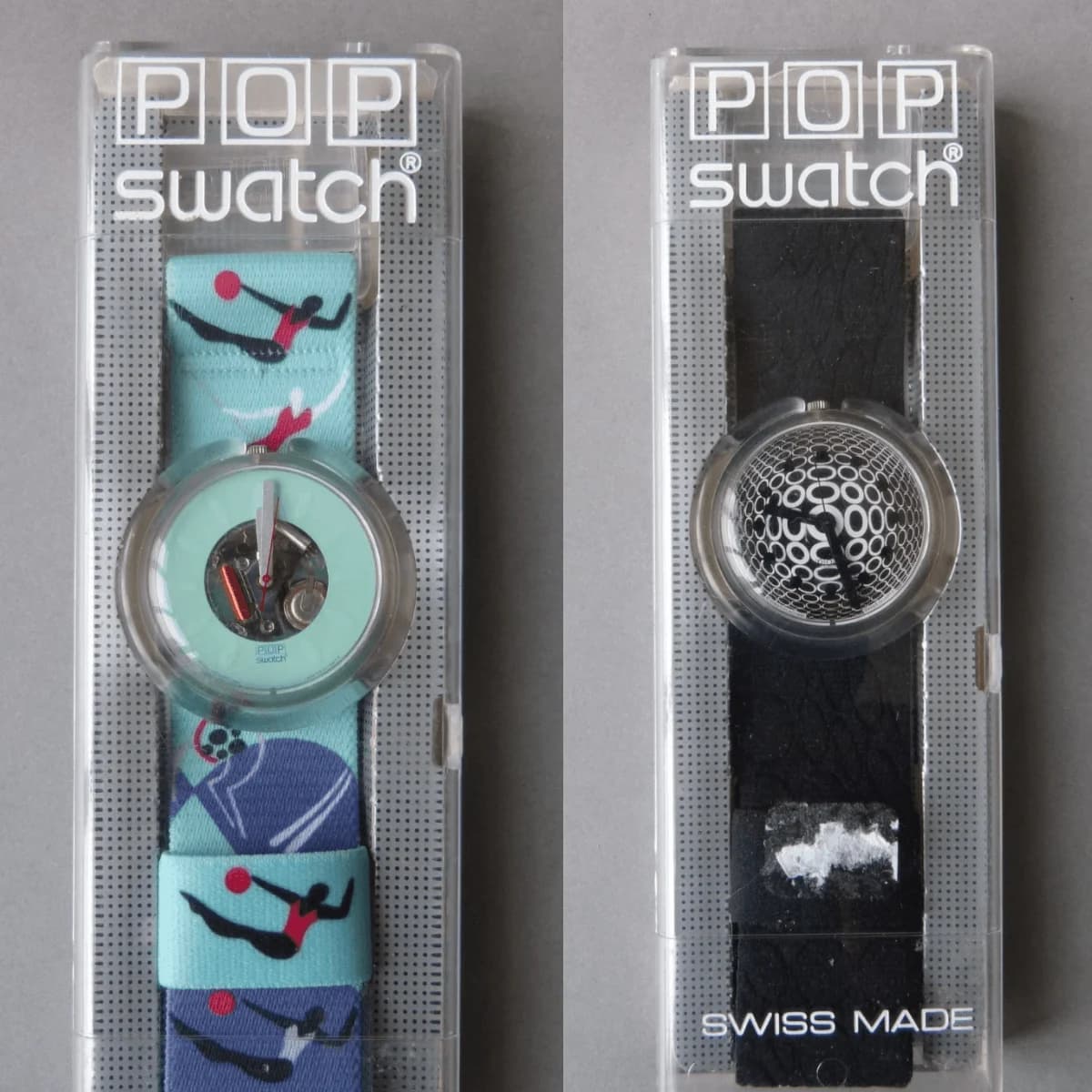
The name “Pop” itself references a Swatch collection launched in 1986, featuring interchangeable components and a case that could be unclipped from the strap, with the bright colors typical of the era. One thing is certain: there will be eight colorful variations of this already unconventional timepiece.


Once again, with the launch of the Royal Pop on May 16, the Swatch Group is creating a unique marketing event that challenges the conventions of watchmaking — and one that deserves a closer look to better understand the motivations of the different players involved, especially since this is far from the group’s first attempt. In any case, if the main objective was to spark passionate debate and generate headlines, the mission has already been accomplished.
As a reminder, the Swatch Group first embraced this ultra-visible collaboration strategy with one of its own subsidiaries, Omega, through the launch in 2022 of an unprecedented Swatch directly inspired by the Speedmaster Moonwatch. Made from an innovative bioceramic material and offered in eye-catching colors, the MoonSwatch was undeniably a major success, opening the doors of watchmaking — and of historic brands — to an entirely new audience: younger, less knowledgeable perhaps, but captivated by the freshness and accessibility of such an original concept.

The Swatch Group continued this strategy and attempted to recreate the marketing masterstroke of the MoonSwatch with another brand from its portfolio, Blancpain, this time based on the brand’s iconic model: the Fifty Fathoms. The formula remained the same — reinterpreting a watchmaking icon using Swatch’s graphic codes and an accessible price point, here applied to the first dive watch in history. Yet this second collaboration did not achieve the same level of success as the one with Omega, for reasons we will explore later on.
From the perspective of the Swatch Group, it is difficult to identify any real downside to this collaboration strategy. Swatch has found an almost perfect formula, using its “fun and accessible” DNA to introduce a new generation to the world of luxury watchmaking, while simultaneously reigniting desire around prestigious brands.
In short, Swatch keeps multiplying these collaborations because they generate massive buzz, attract a younger audience, increase the visibility of luxury maisons, create huge sales volumes, and ultimately reinforce the desirability of the original models rather than cannibalizing them. For the group, it becomes a virtuous circle: by collaborating with its own brands, it generates significant sales, refreshes the image of maisons that can sometimes appear aging — Blancpain being a perfect example, more confidential than Omega — and reaches an entirely new audience.
The clearest example remains, of course, the Omega x Swatch MoonSwatch. The watch created a worldwide phenomenon, with massive queues outside boutiques, viral visibility across TikTok and Instagram, and more than one million pieces sold according to several estimates.
There were several strategic reasons behind these collaborations. Swatch needed to restore its “cool” image. For years, the brand had become somewhat less culturally central, whereas in the mid-1980s it stood as a symbol of bold design, pop culture, and the revival of Swiss watchmaking. These collaborations placed the brand back at the center of pop culture, streetwear, and social media conversations.
From the point of view of prestigious watch brands — starting with Omega — there was also a clear need to rejuvenate their image, often perceived as too classic and sometimes inaccessible to audiences under 30.
The MoonSwatch introduced the Speedmaster to customers who would likely never have stepped into an Omega boutique, increased awareness around the original models, and expanded the brand’s reach to a younger demographic. The collaboration generated massive buzz at a relatively limited cost — not to mention the profitability of the MoonSwatch itself — and succeeded in democratizing an icon without directly altering the original product (although we can admit that this last point may not be unanimously shared by all our readers).
One thing is undeniable: the Swatch Group has mastered the art of the “drop.” Limited or semi-limited editions, carefully orchestrated scarcity, boutique-only sales, mysterious teasers — and even strategically managed leaks — all form part of a strategy borrowed directly from the worlds of streetwear and sneaker culture. It is also closely aligned with the promotional strategies used by urban music artists for major album releases. Today, these massive launches built around meticulously orchestrated hype have become increasingly common.
The result is that every release becomes a cultural event, not merely a watch launch. The MoonSwatch likely generated more media visibility than a traditional advertising campaign worth tens of millions of euros. It is clear that audiences are particularly fascinated by announcements that create noise and anticipation. Over the years, teaser videos for upcoming Watches & Wonders releases — such as those from Rolex this year — have been dissected frame by frame in search of clues intentionally hidden by the brands.
One particularly notable aspect of the upcoming collaboration between Audemars Piguet and Swatch is the massive use of artificial intelligence by the public to generate speculative visuals of the watch. As a result, even though no official image of the model has yet been confirmed, social media is already flooded with watches that, in reality, will never exist.

The MoonSwatch benefited from a much stronger narrative. The collaboration with Omega tapped into the mythology of NASA, the Moon, pop culture, and motorsport. The Speedmaster is one of the most recognizable watches in the world. By contrast, Blancpain’s Fifty Fathoms is legendary among dive watch enthusiasts, but remains a far more niche model. Put simply, the MoonSwatch felt like a “fun and accessible Omega,” whereas the Blancpain collaboration came across more as “an expensive Swatch.”
Priced higher, based on a lesser-known model, and lacking the freshness of a truly unprecedented collaboration concept, the partnership between Blancpain and Swatch may initially have attracted crowds — and even overnight campers outside boutiques — but in the long run it has remained far more anecdotal. While it was almost certainly profitable, there is a strong chance that the executives behind the project had hoped for something bigger.
So after one massive success and a more mixed follow-up, what can we expect from the Royal Pop? Is this strategy truly the right move for Audemars Piguet? Let’s not forget that AP is not part of the Swatch Group. That alone shows how powerful the concept has become — powerful enough to attract even ultra-premium independent brands. Whether that is a good thing or not remains open to debate.
There is undeniably a real risk involved. A portion of collectors believe these collaborations “trivialize” iconic models, make luxury too accessible, and dilute exclusivity. Social media has already been flooded with posts proclaiming the death of Audemars Piguet, describing the collaboration as the moment the brand “killed” the Royal Oak, or even as the final nail in the coffin.
As always, the debate is deeply polarized and leaves little room for nuance. Those reactions are understandable: with this collaboration, Swatch is crossing a new threshold in terms of prestige. Seeing the brand partner with Audemars Piguet on a model as exclusive and culturally significant as the Royal Oak feels, to many, like a dramatic contradiction.
That being said, the reasons that may have led Audemars Piguet to accept a collaboration with Swatch are likely very different from those of Omega or Blancpain.
For Audemars Piguet, the goal is not necessarily to sell more watches in the short term — demand already far exceeds supply. The strategy is more likely about controlling and shaping the brand’s cultural image for the years ahead, while positioning itself more broadly within modern consumer culture.
Over the past fifteen years, under the leadership of François-Henry Bennahmias, AP has transformed itself through collaborations with artists and musicians, a strong presence within hip-hop and sports culture, and — more generally — a communication strategy that feels significantly younger and more urban-oriented than that of Patek Philippe or Vacheron Constantin.
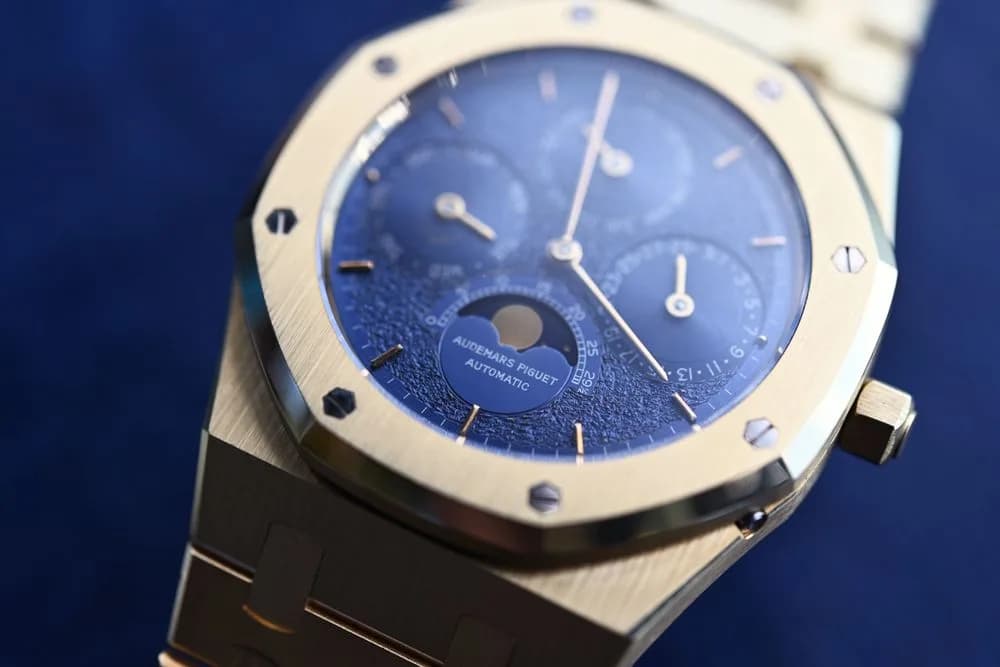
The Audemars Piguet Royal Oak has become a global cultural symbol, worn by artists and athletes such as Jay-Z, LeBron James, and Drake. It is also worth noting that the brand has already experimented with unexpected collaborations, such as the reference 26585CM.OO.D301VE.01 — a Royal Oak reimagined by superstar rapper Travis Scott and his label Cactus Jack.

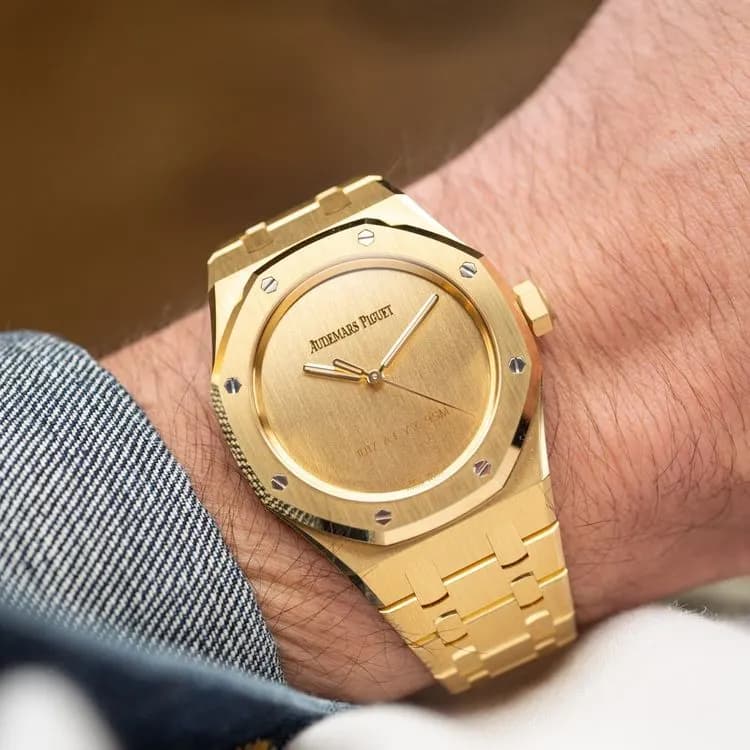
We can also mention the two Royal Oak Concept Tourbillon “Marvel” editions featuring Spider-Man and Black Panther directly on their dials. Contemporary artist KAWS was also given his own collaboration, and this is far from the first time the watchmaker has partnered with another brand. AP had already collaborated with the streetwear label 1017 ALYX 9SM, itself known for high-profile collaborations with Dior and Nike.
When viewed in the broader context of these previous partnerships, the collaboration with Swatch clearly fits into a wider strategy aimed at rejuvenating AP’s image — one that embraces contemporary trends and positions the brand closer to hip-hop and urban culture, which today have largely overtaken traditional pop culture in terms of influence.
Naturally, some collectors will regret seeing such a prestigious maison move so far away from its original image. Yet it is difficult to deny that the strategy has, so far, been successful, creating genuine differentiation from its main competitors — notably Vacheron Constantin and Patek Philippe.


Another factor may also help explain the timing of this collaboration: the recent legal setbacks suffered by Audemars Piguet regarding the protection of the Royal Oak’s design. The brand has lost several trademark-related battles tied to some of the model’s most recognizable design codes — including the octagonal bezel, exposed screws, and tapisserie dial — notably in Japan in 2024, and later in the United States. Authorities ruled that these elements had become too common within the watch industry to remain exclusively associated with AP.
In this context, some observers have put forward an interesting theory: rather than allowing the market to become saturated with affordable watches inspired by the Royal Oak, Audemars Piguet may have decided to take back control of the narrative by partnering with Swatch and offering its own more accessible interpretation of the iconic design. That theory remains highly speculative, however, and neither Audemars Piguet nor Swatch has confirmed any connection between these legal disputes and the creation of the Royal Pop.
The paradoxical risk facing AP today is becoming too inaccessible — and therefore culturally disconnected from younger generations. Even if the brand is clearly attempting to attract a younger and more mainstream audience through its aesthetic universe, prices remain as exclusive as ever, combined with an extreme scarcity strategy.
A collaboration with Swatch therefore allows — or would allow — the Royal Oak to return to mainstream conversations without lowering the price of the “real” Royal Oaks. It is important to remember that the target audience here is not Audemars Piguet’s traditional clientele. Purists will likely dismiss the collaboration altogether; on the other hand, it gives an entire category of consumers and watch enthusiasts access to a design icon they could previously only dream about.
It also gives younger customers an opportunity to discover the brand, have fun with a model that may spark a long-term interest in AP, and perhaps one day become genuine Audemars Piguet clients — this time without Swatch involved.
Ultimately, much like the collaboration with Omega, this partnership with Swatch acts as an entry-level gateway toward the “real” models — simply with a much steeper step between the two worlds. Above all, the key ingredient of any successful marketing campaign is attention, and the intense divide of opinions surrounding this release is already generating tremendous excitement around the model, which will almost certainly impact sales.
At the same time, we should remain realistic: today, Audemars Piguet remains extraordinarily rare and inaccessible. Given the brand’s tightly controlled production volumes, waiting lists are unlikely to change. That is the crucial point: scarcity still protects prestige.
It is nevertheless important to highlight several risks and concerns surrounding this upcoming collaboration compared to Swatch’s two previous partnerships. Omega and Blancpain are relatively broad and far more mainstream brands, whose models — with a few exceptions — are generally available in boutiques. Audemars Piguet, on the other hand, is built around extreme exclusivity and waiting lists that can stretch across several years.
As a result, part of the collector community believes that a collaboration with Swatch could trivialize the Audemars Piguet Royal Oak or simply exhaust a design that has already been widely copied — from the Casio G-Shock GA-2100 “CasiOak” with its similar bezel, to models such as the Tissot PRX, the Michel Herbelin Odyssée, or the Nivada F77. The risk is turning an ultra-luxury symbol into something too mainstream, potentially alienating the brand’s historical clientele.
By partnering with Swatch, Audemars Piguet is therefore playing a delicate game: maximizing cultural visibility — and likely generating huge sales — without destroying exclusivity. In reality, AP does not merely sell watches; it sells cultural status. And today, culture is shaped just as much on TikTok and Instagram as it is within traditional watch fairs and salons. The bet is bold, but certainly not without risk.
One particularly interesting question remains: could Patek Philippe ever risk a collaboration with Swatch around the Nautilus or the Aquanaut?
In our view, not under the brand’s current strategy, which remains deeply rooted in traditionalism, exclusivity, and extreme refinement — as reflected by the carefully selected nature of its partnerships, such as the collaboration with Tiffany & Co.. Then again, the very idea of a collaboration between Audemars Piguet and Swatch would have sounded absurd only a few weeks ago.
One thing is certain: a new line has been crossed, and it may very well open the door to other surprising — and divisive — collaborations in the future.
As you have probably understood throughout these lines, we have tried to remain as factual and analytical as possible, bringing nuance to debates that are sometimes explosive. It is always easy to criticize innovation; instead, we tried to understand it — while still expressing a few reservations of our own.
Now, all that remains is to see the final watches and the actual success — or failure — of this highly unusual collaboration. Only then will we know whether this was a stroke of marketing genius… or merely a damp squib. The dice have been rolled.