With their major watchmaking innovations and distinctive designs, F.P. Journe watches have embodied a long-term vision from the moment they were introduced, allowing the models to remain truly timeless despite the adjustments and evolutions made throughout their production.
Ultimately, relatively little has been written about the Octa Lune. Although it was a natural evolution of the Octa Réserve de Marche, introduced in 2001, the Octa Lune appeared later and, in addition to the large date display and power reserve indicator, features a moon phase—one of the most poetic complications in watchmaking.
Let us therefore take a closer look at what “Octa” actually means.
The Octa calibre: precision and autonomy
The Octa collection was created by François-Paul Journe with one “simple” idea in mind: to achieve the highest possible degree of precision and autonomy in a wristwatch.
Although this is not a complication in the strict horological sense of the term, this “idea” represents a genuinely useful watchmaking ideal that is sometimes worth recalling.
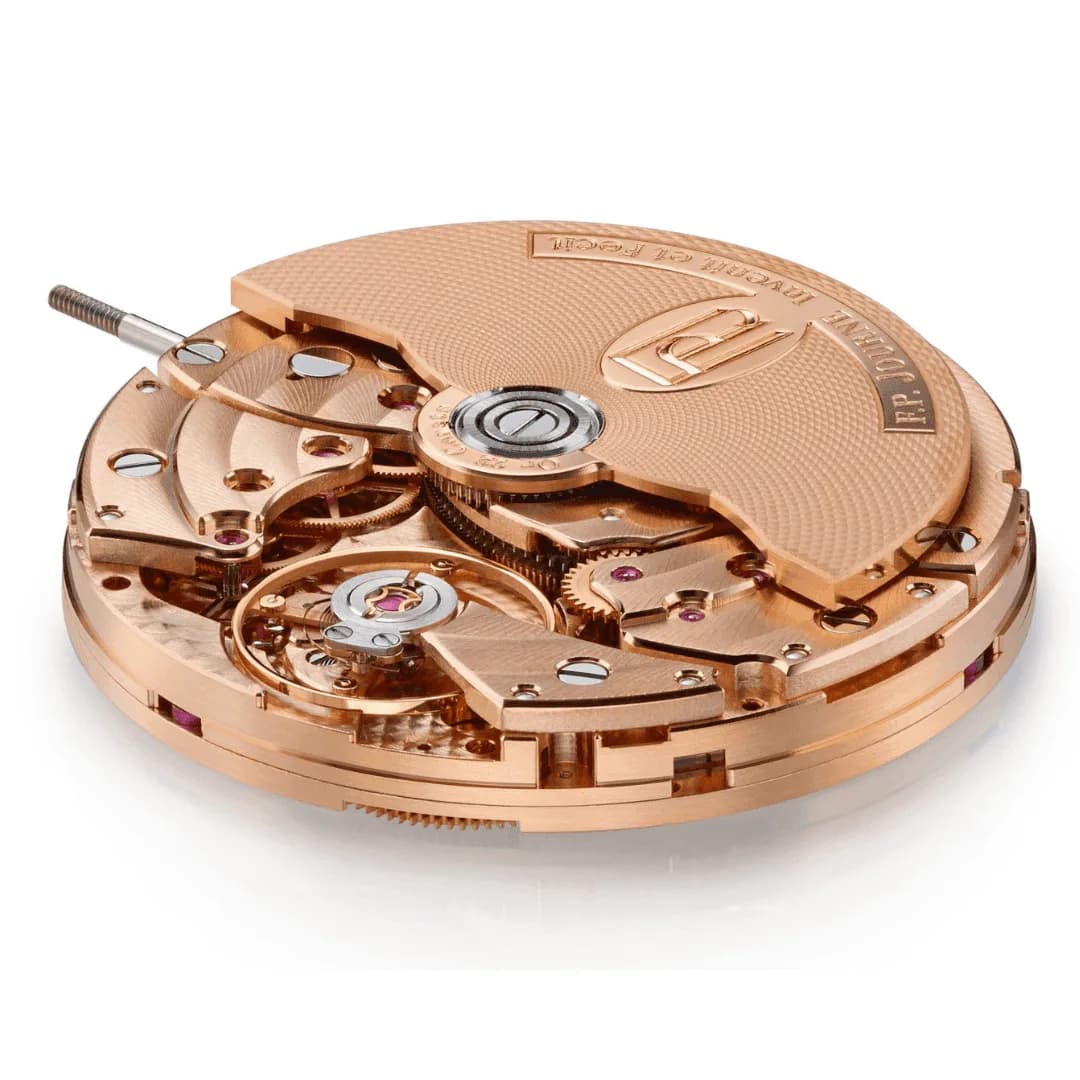
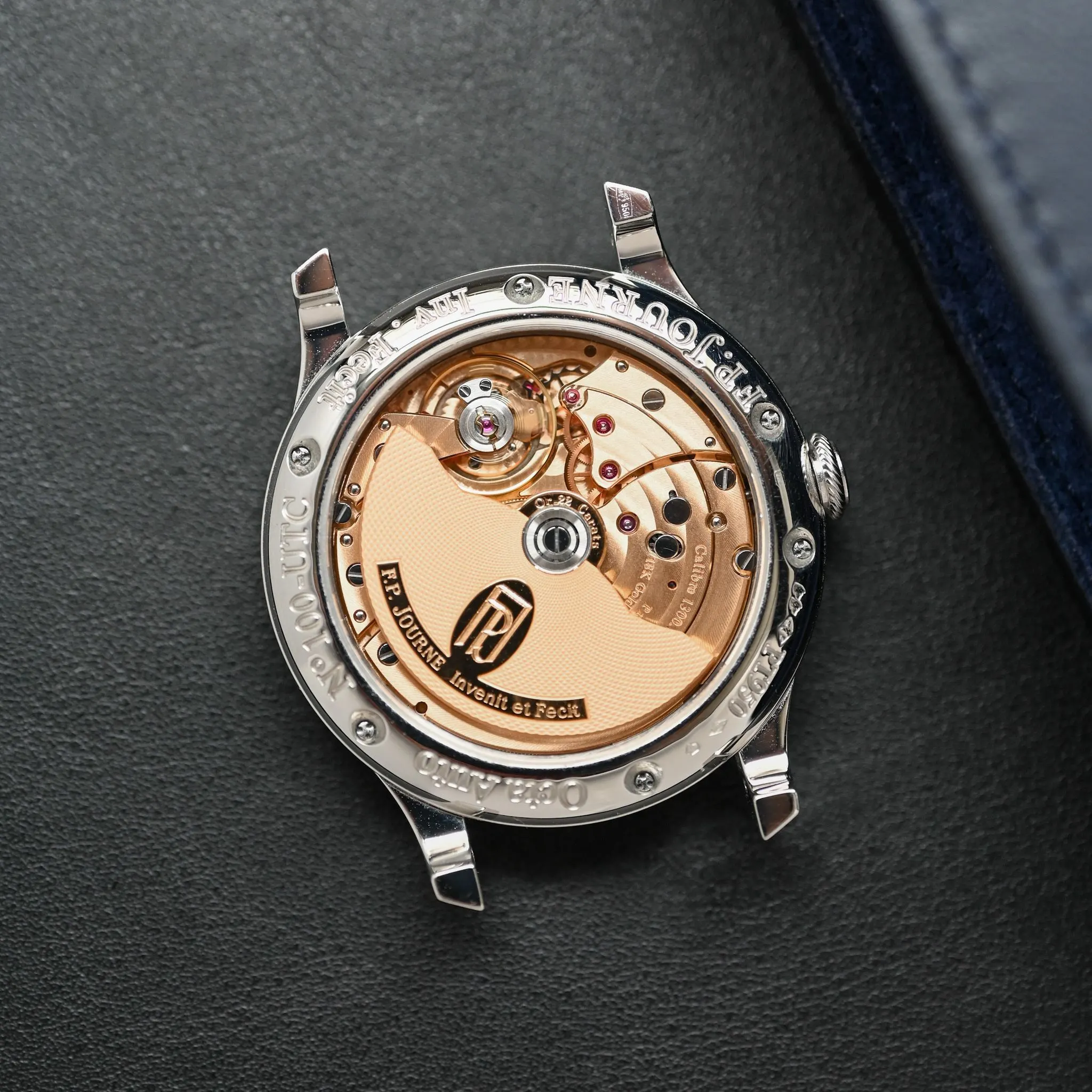
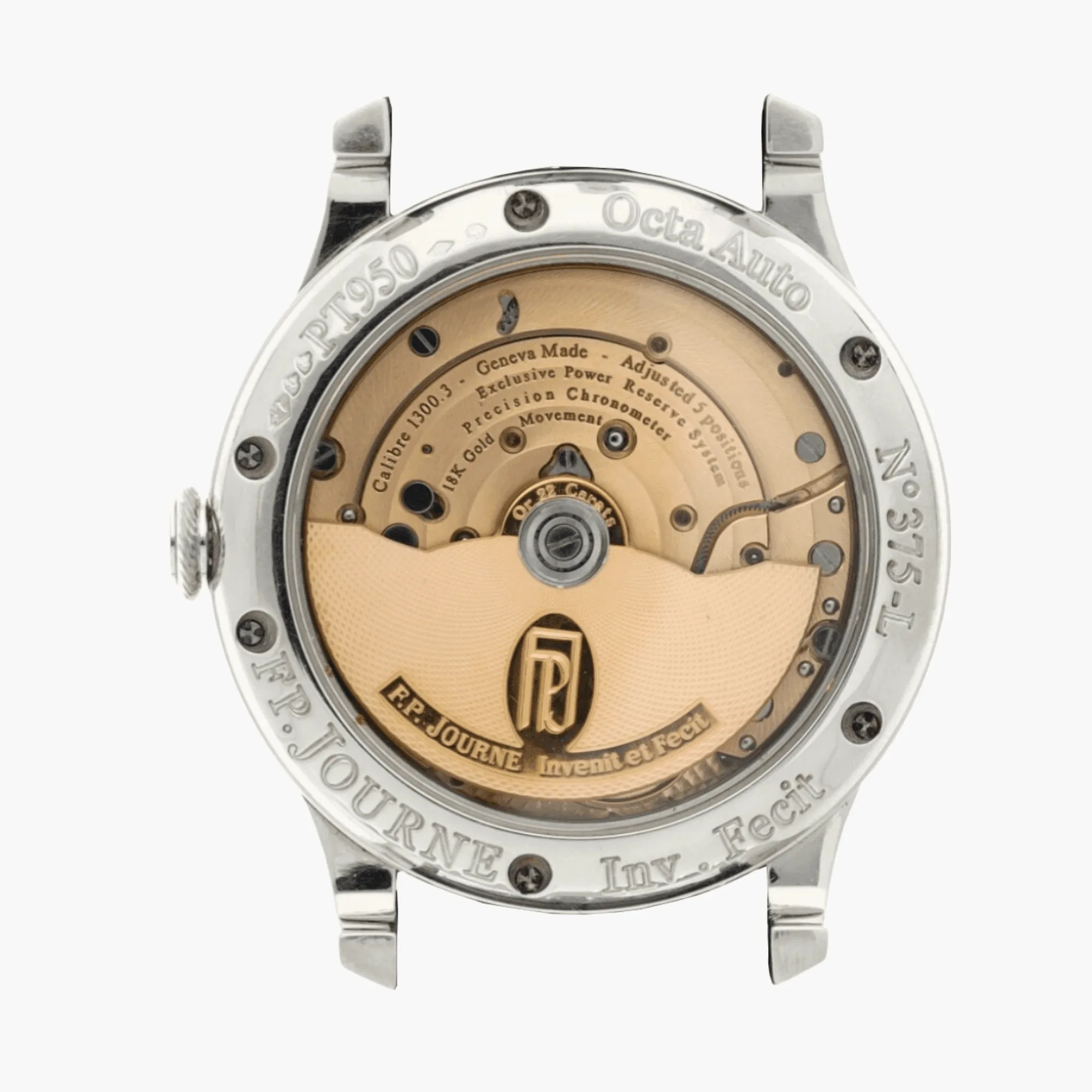
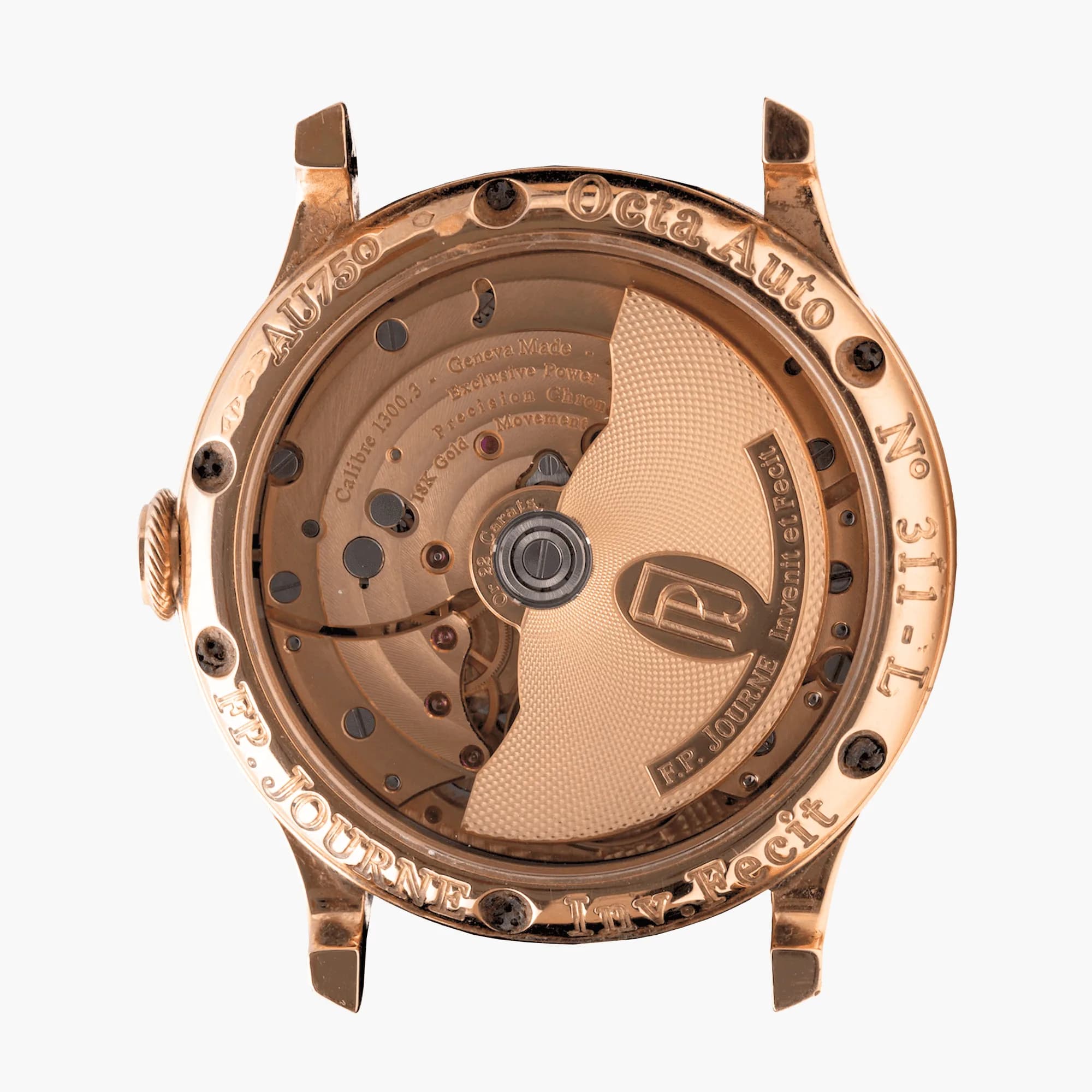
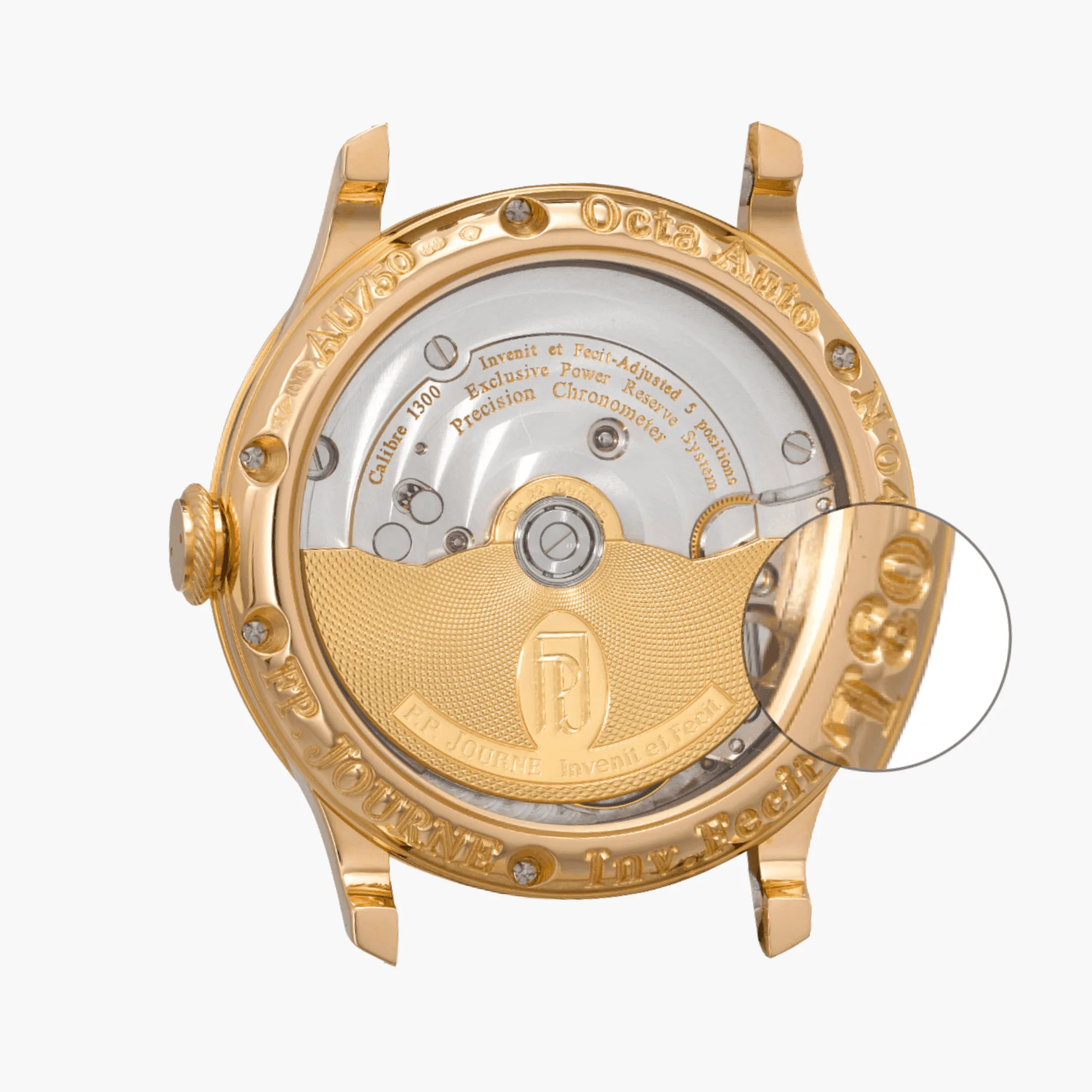
The Octa calibre 1300 was introduced in 2001 and was the first automatic wristwatch calibre to ensure chronometric precision for five days, or 120 hours (with an effective power reserve of 160 hours). This achievement was made possible by increasing the capacity of the mainspring—a strip of metal one millimetre high and one metre long!
The calibre “1300” takes its name from its diameter (13 lignes – 13), combined with the year in which it was completed: 2000 (00).
From the outset, F.P. Journe intended the calibre to be adaptable for use across several models while retaining the diameter and thickness of the original movement: Octa Chronographe, Octa Calendrier, Octa Lune, Octa Zodiaque, Octa Jour/Nuit, Octa Divine, Octa UTC, Octa Réserve de Marche…
Since then, it has undergone only two evolutions, and François-Paul Journe has stated that this calibre “is an accomplished movement that requires no further modification due to its almost unreal performance.”
The different evolutions of the Octa 1300 calibre
First version (2001–2004)
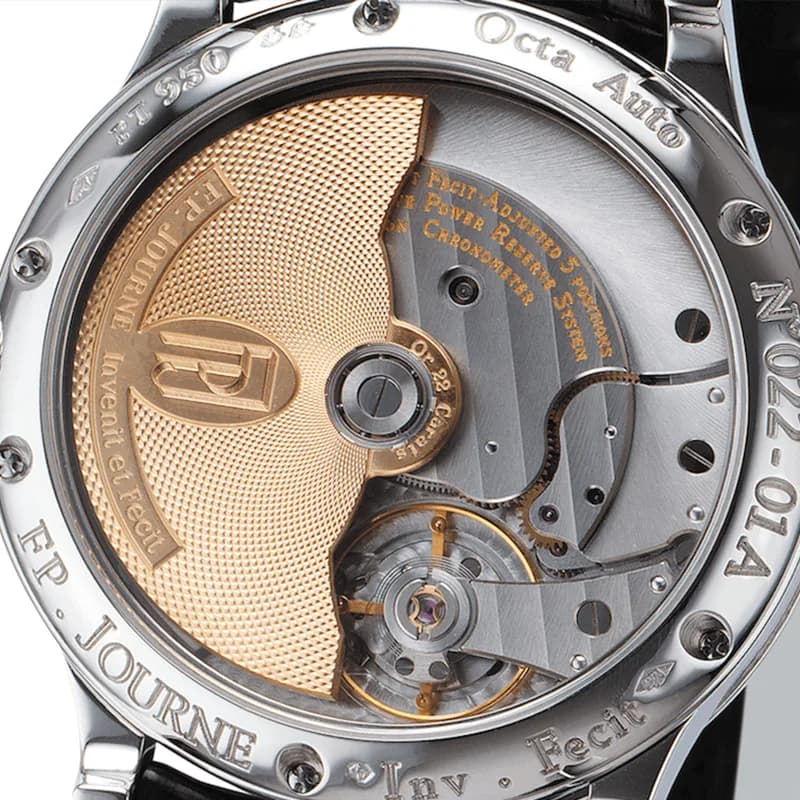
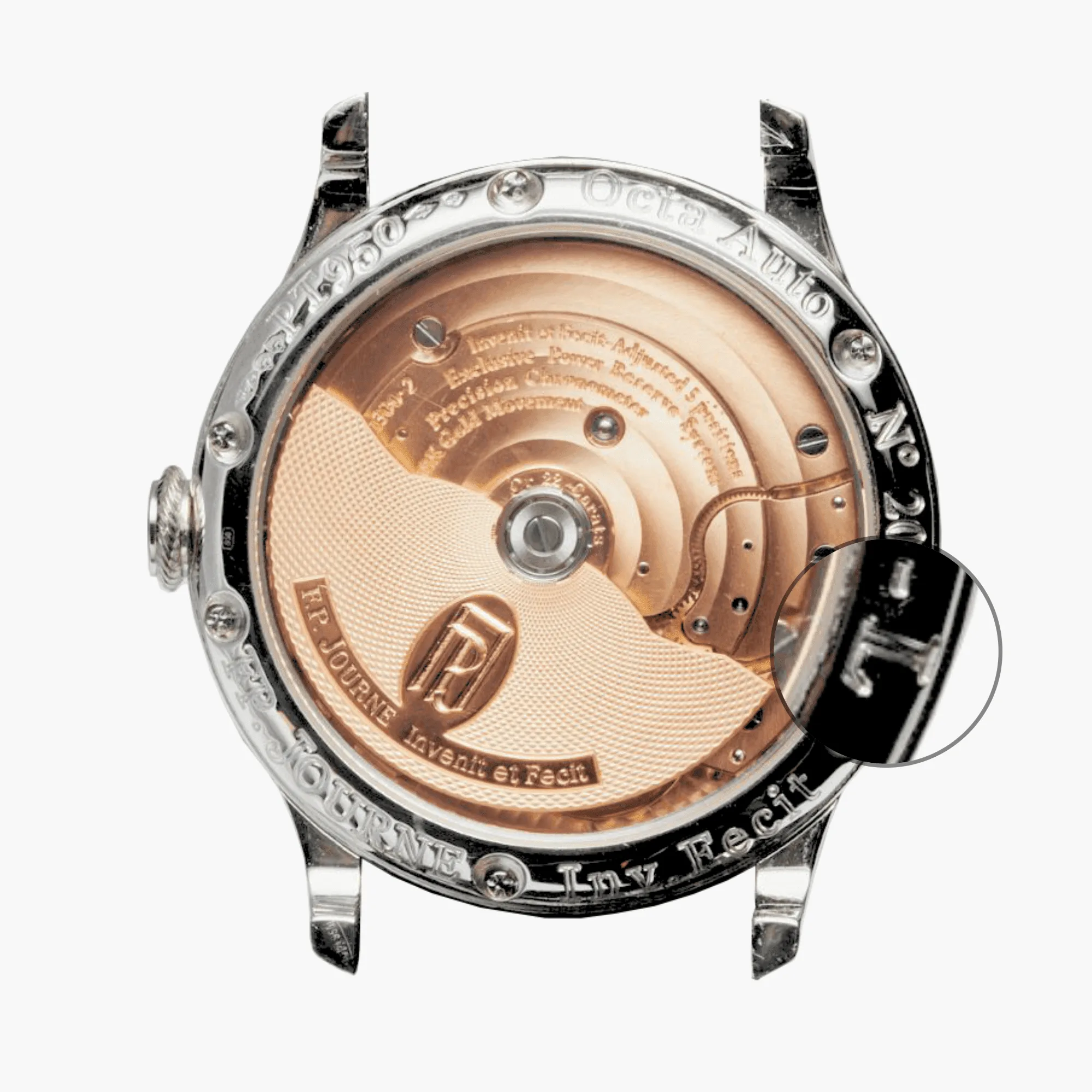
The first version of the calibre was produced from 2001 to 2004 and crafted from rhodium-plated brass. The earliest examples featured vertical Côtes de Genève, which were quickly replaced by circular Côtes de Genève shortly after the very first models were produced. Its bidirectional 22-carat rose gold rotor efficiently winds the long mainspring responsible for the movement’s 160-hour power reserve.
Second version (2004–2007)
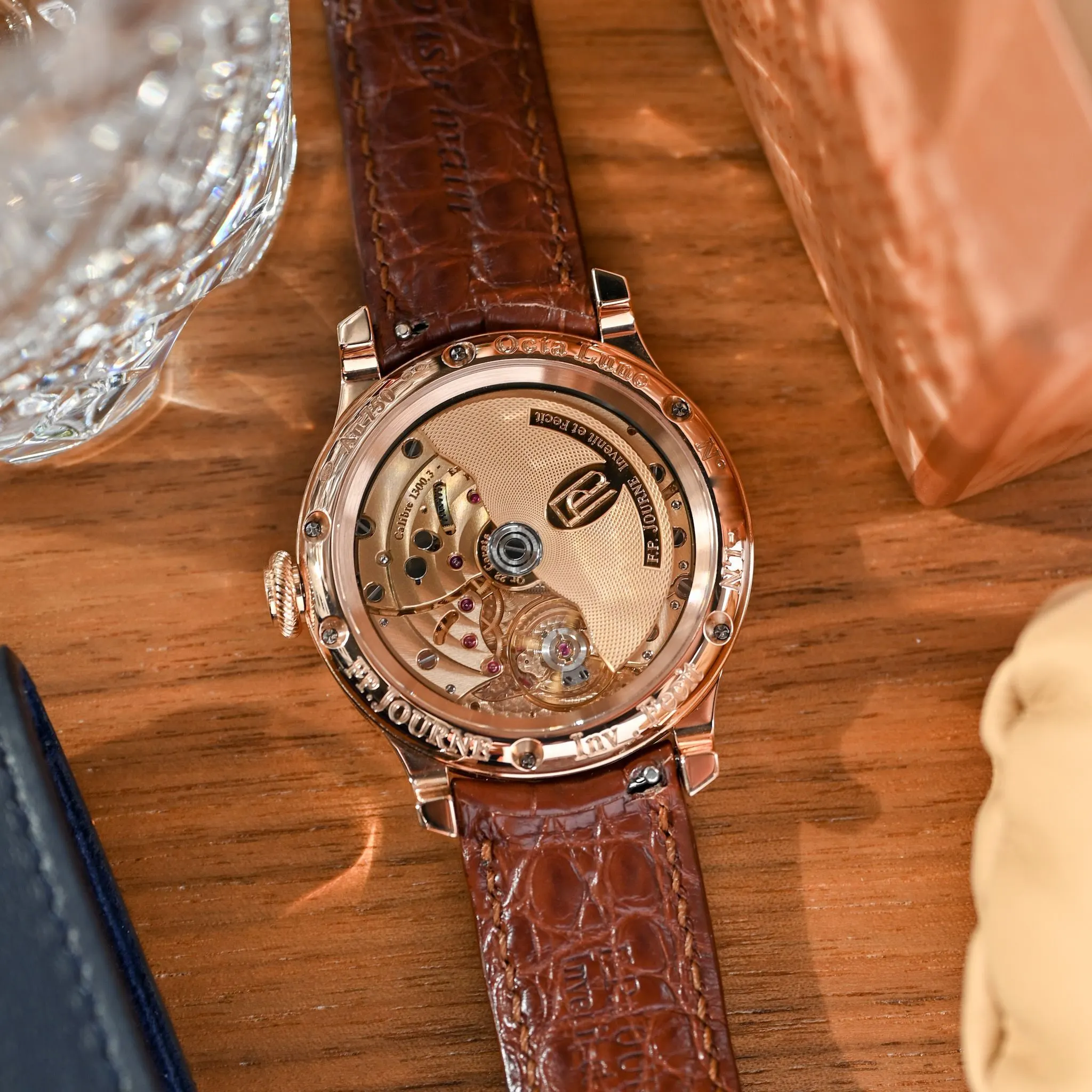
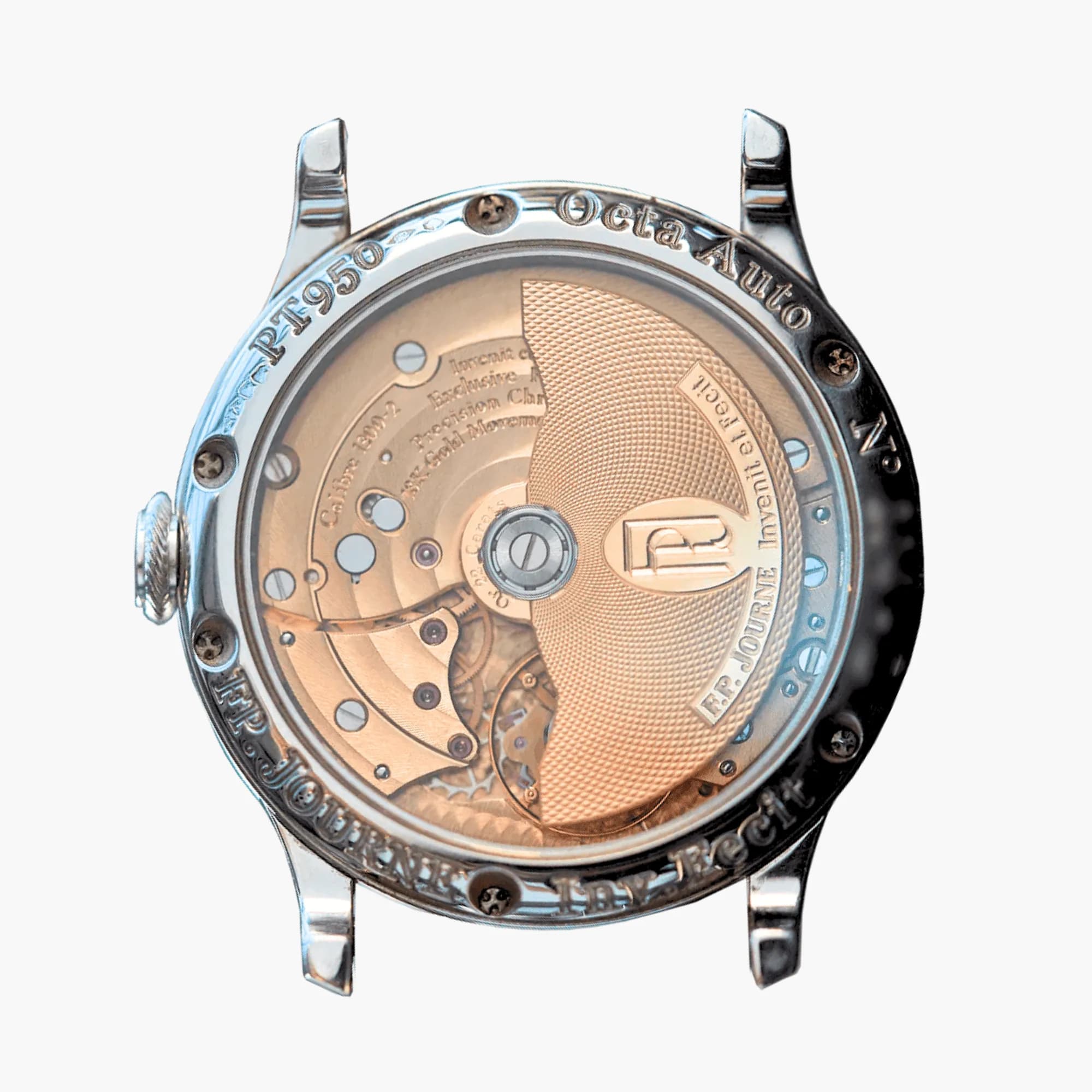
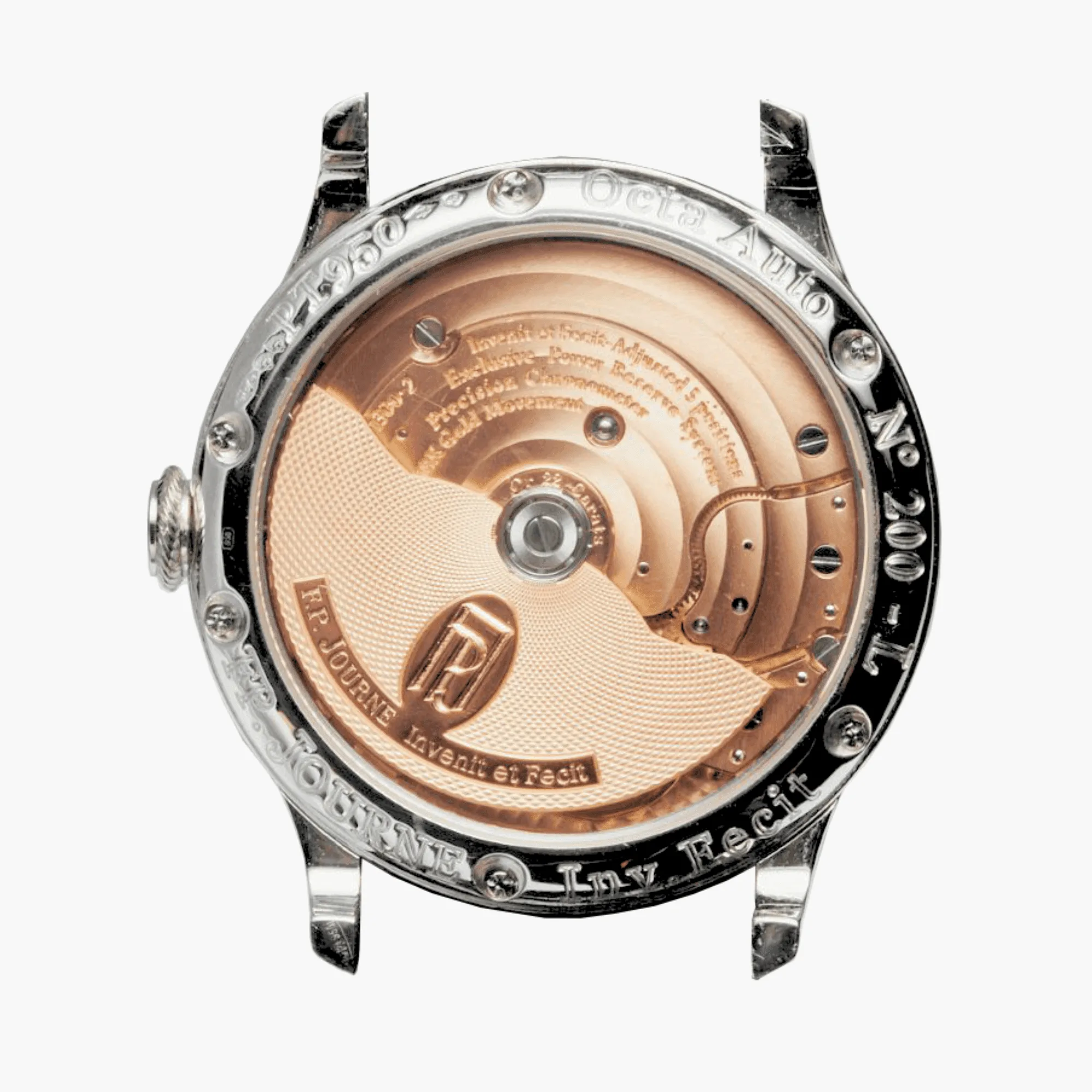
The second version, calibre 1300.2, appeared in 2004, when F.P. Journe movements transitioned from brass to rose gold. The brand thus became one of the first manufactures to produce calibres entirely in gold, requiring even greater care during assembly due to gold being softer than brass.
Third version (2007–present)
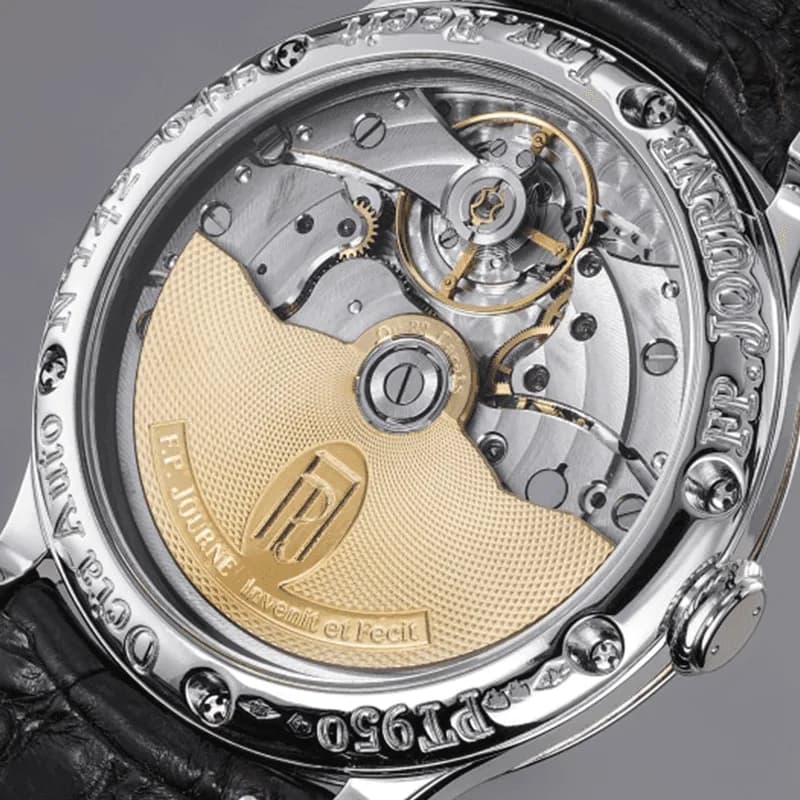
The third and current version, calibre 1300.3, was introduced in 2007, when the oscillating weight was changed to a unidirectional winding system. Indeed, the relatively sedentary lifestyle of many clients meant that the bidirectional system did not always ensure optimal winding of the mainspring. More sensitive to even the slightest movement of the wrist, this new system allows the mainspring to be wound more quickly.
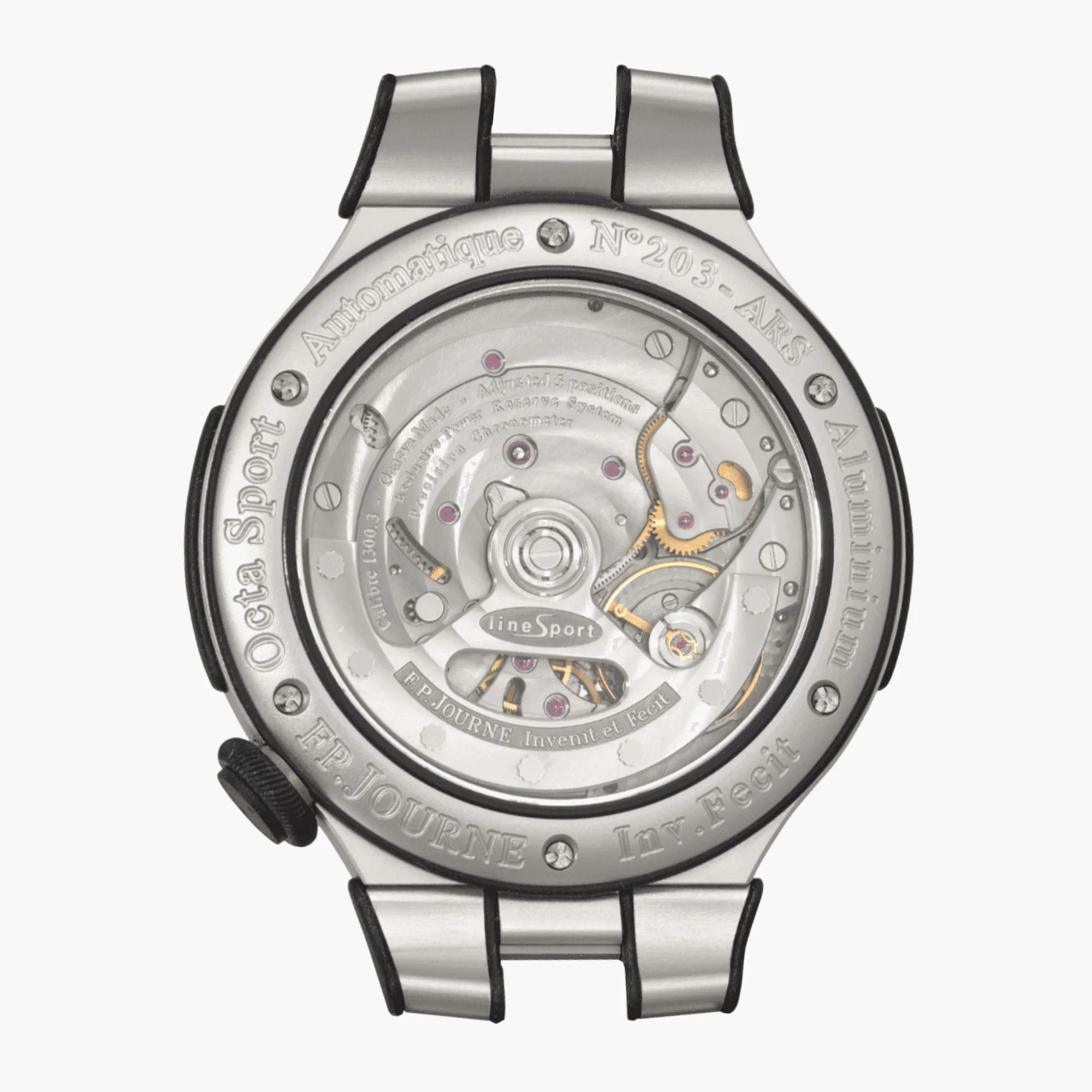
From 2011 onwards, this version was also produced in aluminium to power the Octa Sport models.
The different evolutions of the Octa Lune
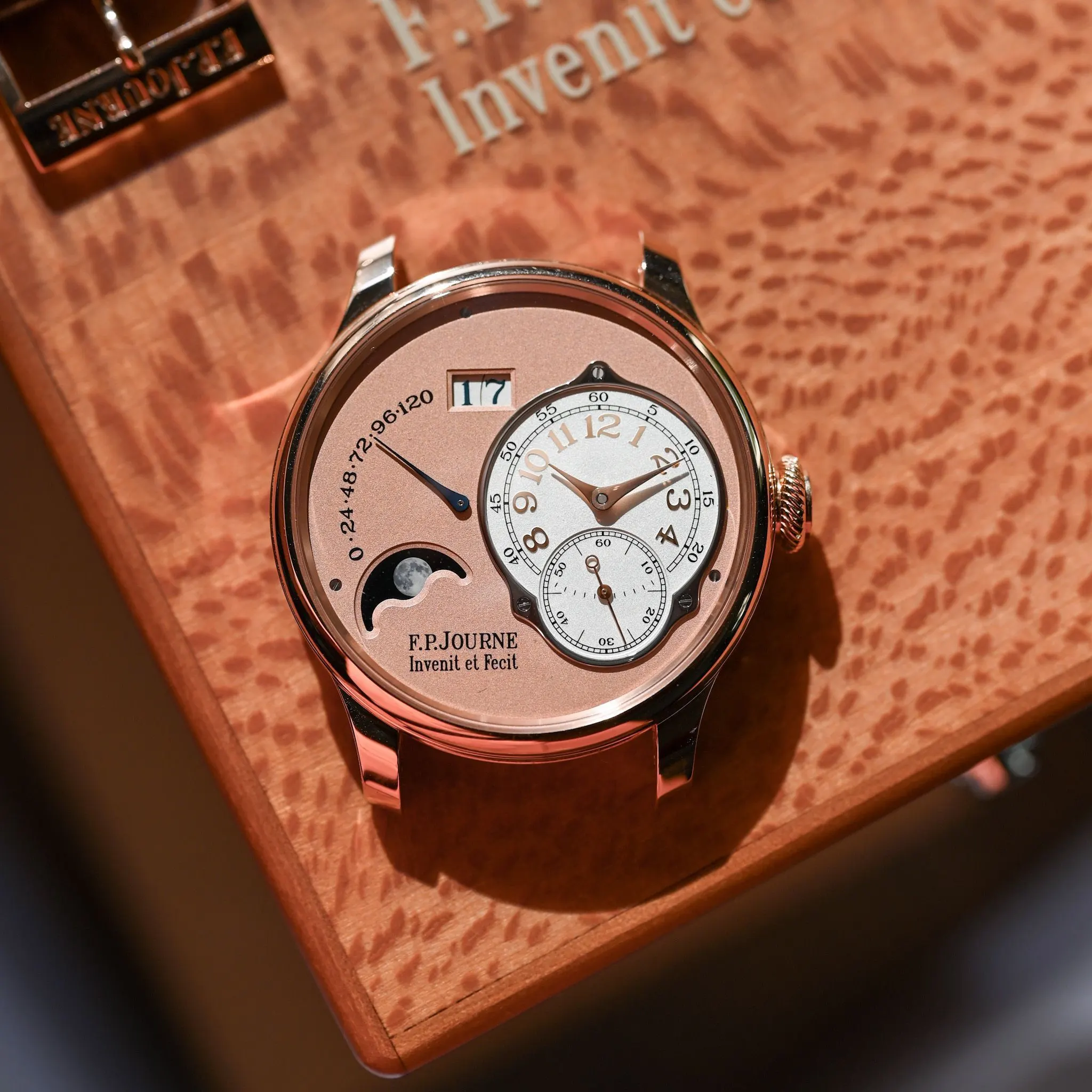
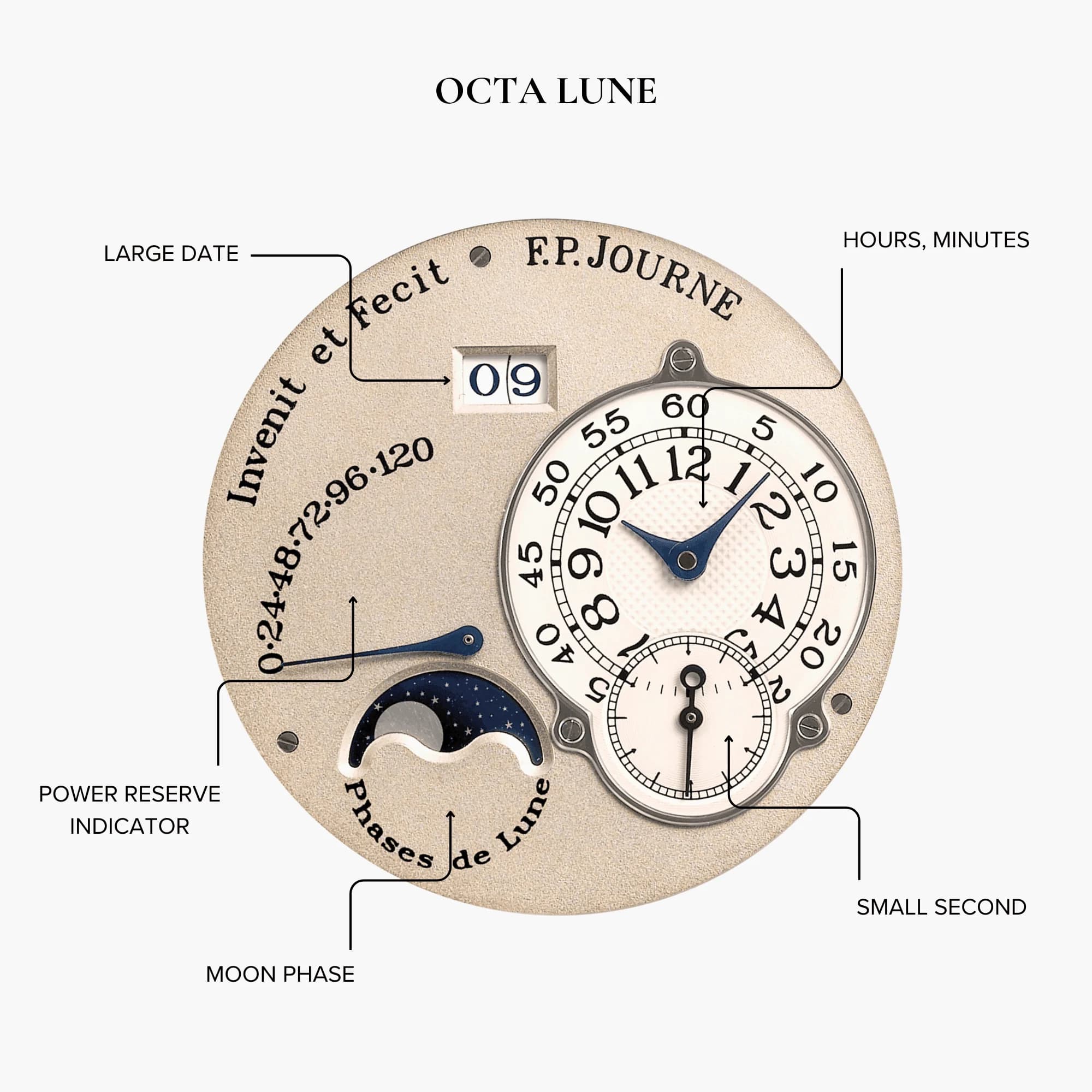
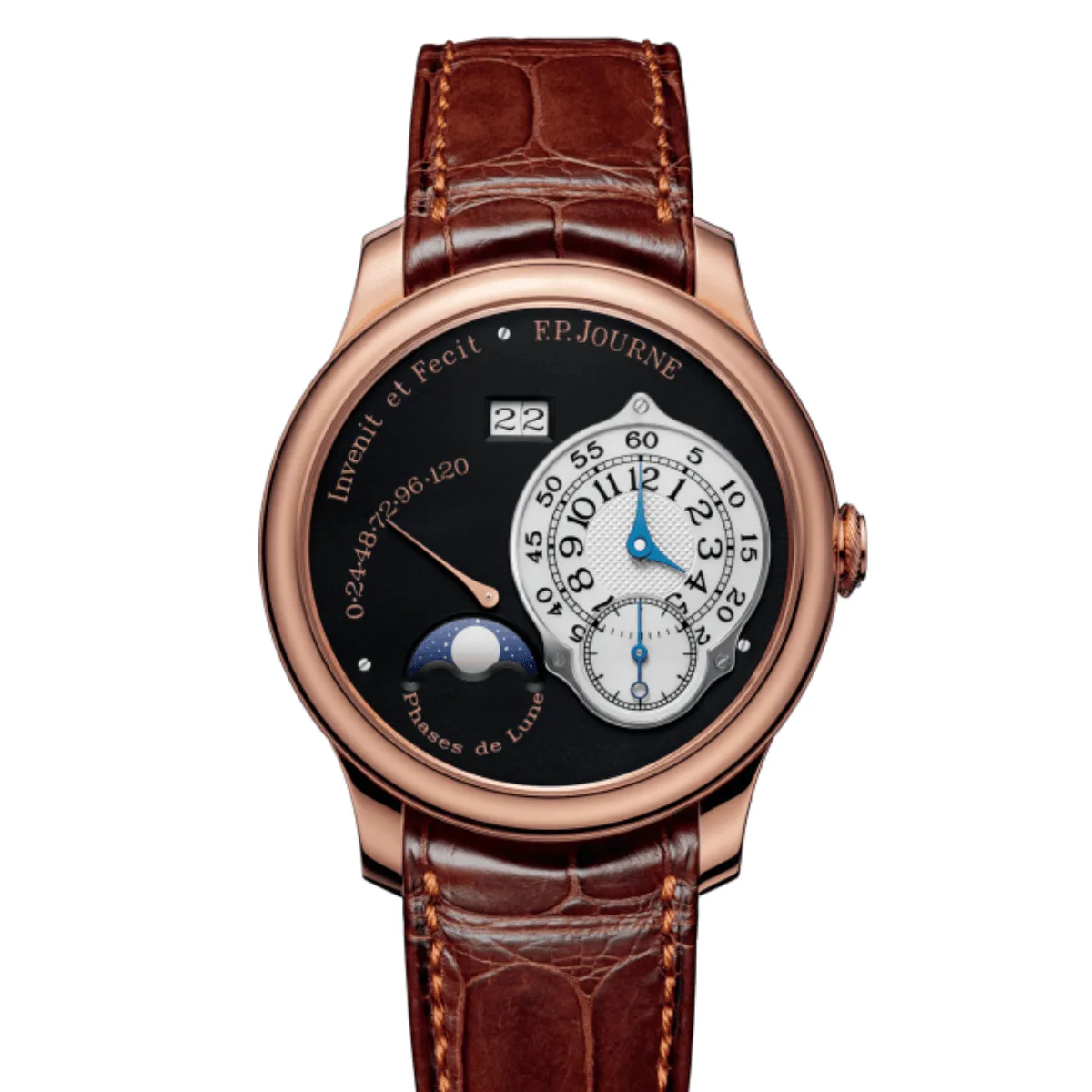
Introduced in 2003, following the Octa Réserve de Marche, the Octa Chronographe (2001) and the Octa Calendrier (2002), the Octa Lune was naturally equipped with calibre 1300 and features an off-centred dial at 3 o’clock displaying the hours and minutes, along with a small seconds subdial.
On the left-hand side of the dial are the large date display at the top, the power reserve indicator in the centre, and the moon phase indication displayed through an aperture in the dial.
Several generations followed, each introducing significant variations.
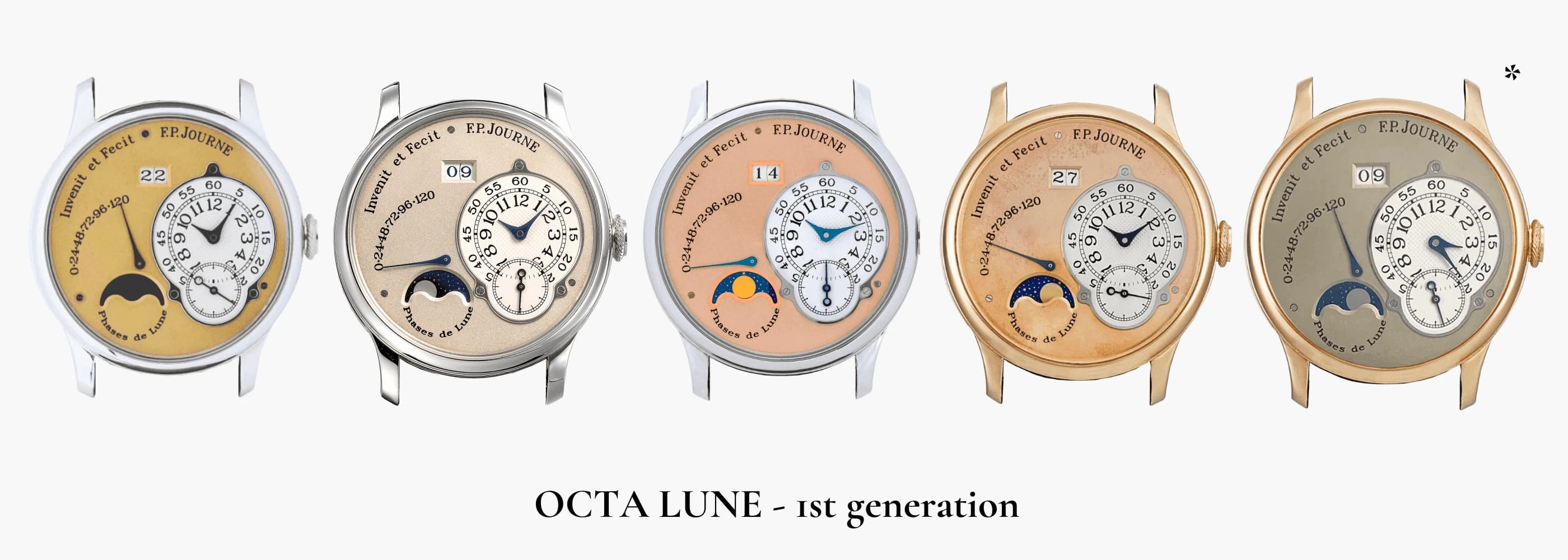
First generation of the Octa Lune (2003–2005)
The first generation, introduced in 2003, immediately received the Men’s Watch Prize at the Grand Prix d’Horlogerie de Genève (GPHG).
These watches were equipped with a rhodium-plated brass movement and featured a 38 mm case in either platinum or rose gold. They were therefore produced for a relatively short period of just two years before the introduction of rose gold movements.
As with most first-generation F.P. Journe models, three dial colours were available: yellow gold (exclusively paired with the platinum case), white gold, or rose gold.
The asterisk shown in the photo above indicates a possible combination (photomontage) that we have yet to observe.
In addition to their movement, these models can be identified by:
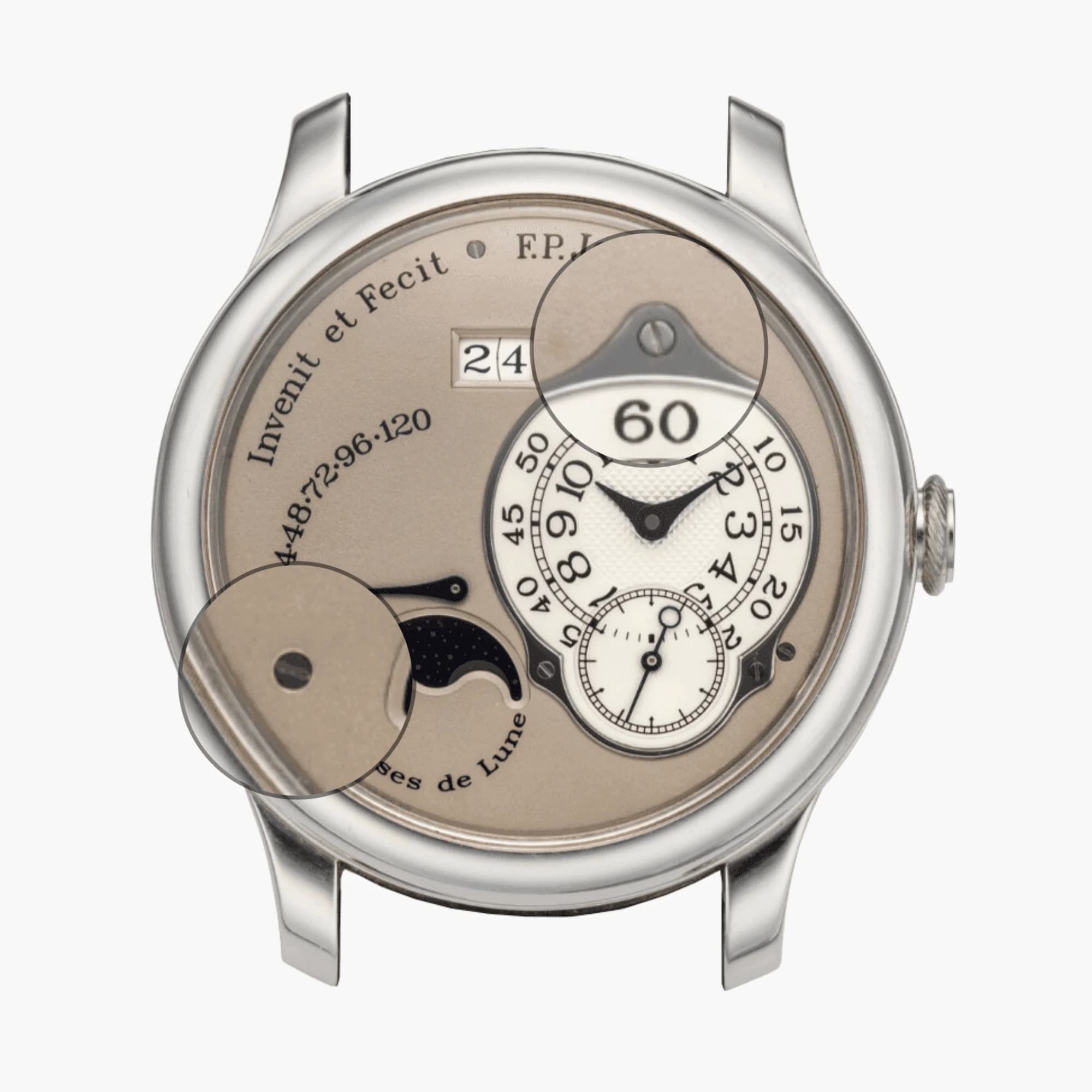
- the watch’s serial number ending in 03L or 04L;
- the two digits indicate the year in which the case was produced, while the letter refers to the “Lune” model;
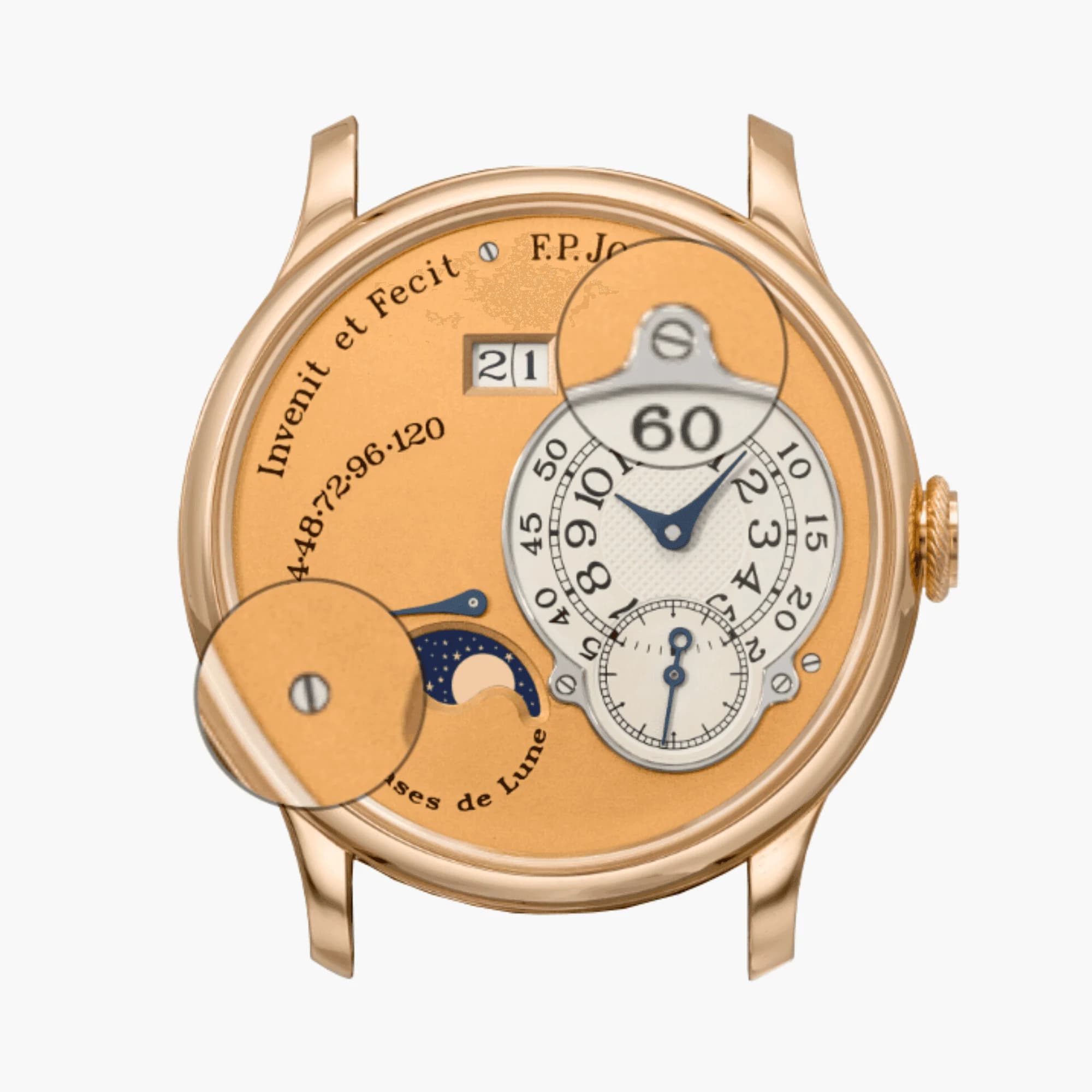
- the distinctive shape of the steel rings found on this generation; the dial screws, whose heads are wider than those found on subsequent generations.
Production of this first series continued until 2005 and, according to our estimates, approximately 150 examples were produced.
It should be noted that the transition to the rose gold calibre 1300.2 took place gradually between 2004 and 2005. Some components of the watch—notably the steel rings—had already been manufactured and were therefore still used, meaning that some examples can be found with first-generation dials paired with rose gold movements. This is the rarest known configuration.
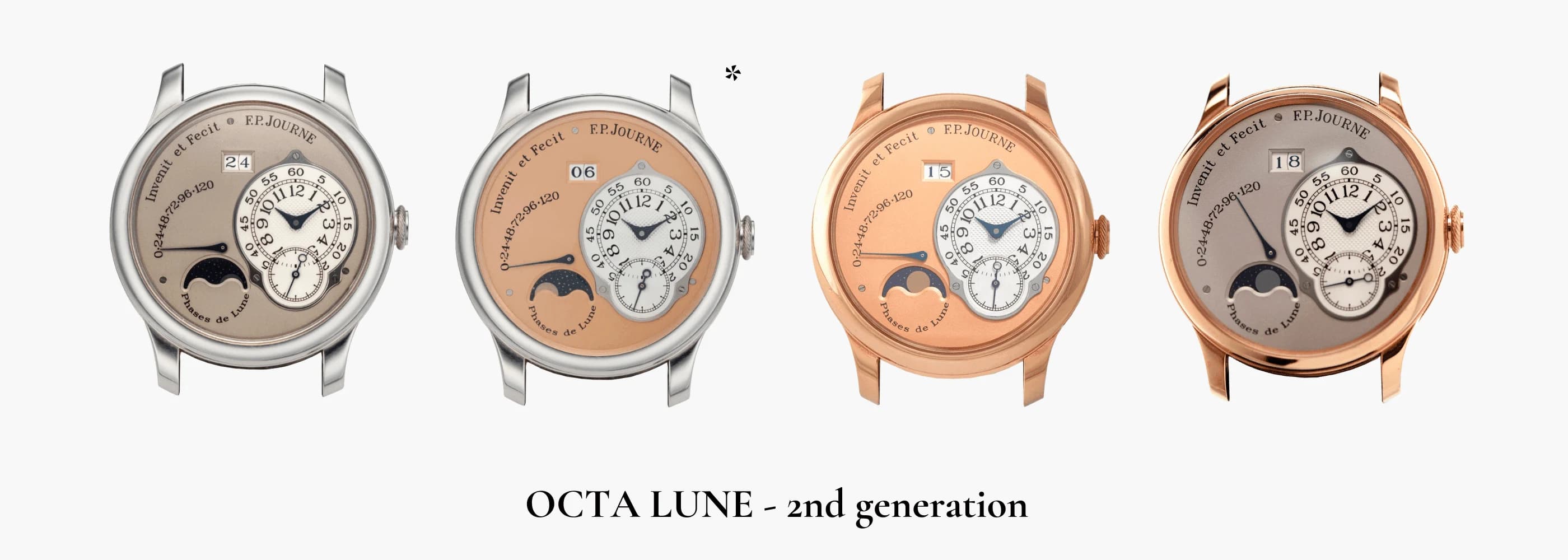
Second generation of the Octa Lune (2005–2015)
The second generation was marked by the introduction of the new rose gold movements in 2004/2005. This change of material resulted in the calibre 1300.2 designation. As previously mentioned, this calibre was used for only a relatively short period, as it was replaced in 2007 by calibre 1300.3 with its unidirectional oscillating weight.
Based on our observations, this transition appears to have occurred between serial numbers 300 and 310. As serial numbers continued sequentially from the first generation, it would appear that approximately 150 examples equipped with calibre 1300.2 were produced.
The asterisk shown in the photo above indicates a possible combination (photomontage) that we have yet to observe.
The cases of this generation were now available in either 38 mm or 40 mm, and continued to be offered in platinum or rose gold.
As with other F.P. Journe models of this generation, the available dial colours remained unchanged, with the exception of the yellow gold dial, which was discontinued because François-Paul Journe did not favour the combination of yellow gold dials with rose gold movements.
Several changes were introduced, making these models relatively easy to identify:
- the watch’s serial number now ends with the letter L (still referring to “Lune”), while the indication of the case’s year of production disappears;
- the steel rings become more rounded;
- the dial screw heads become wider.
As this second generation remained in production until 2015, we estimate that a total of approximately 200 to 250 examples were produced.
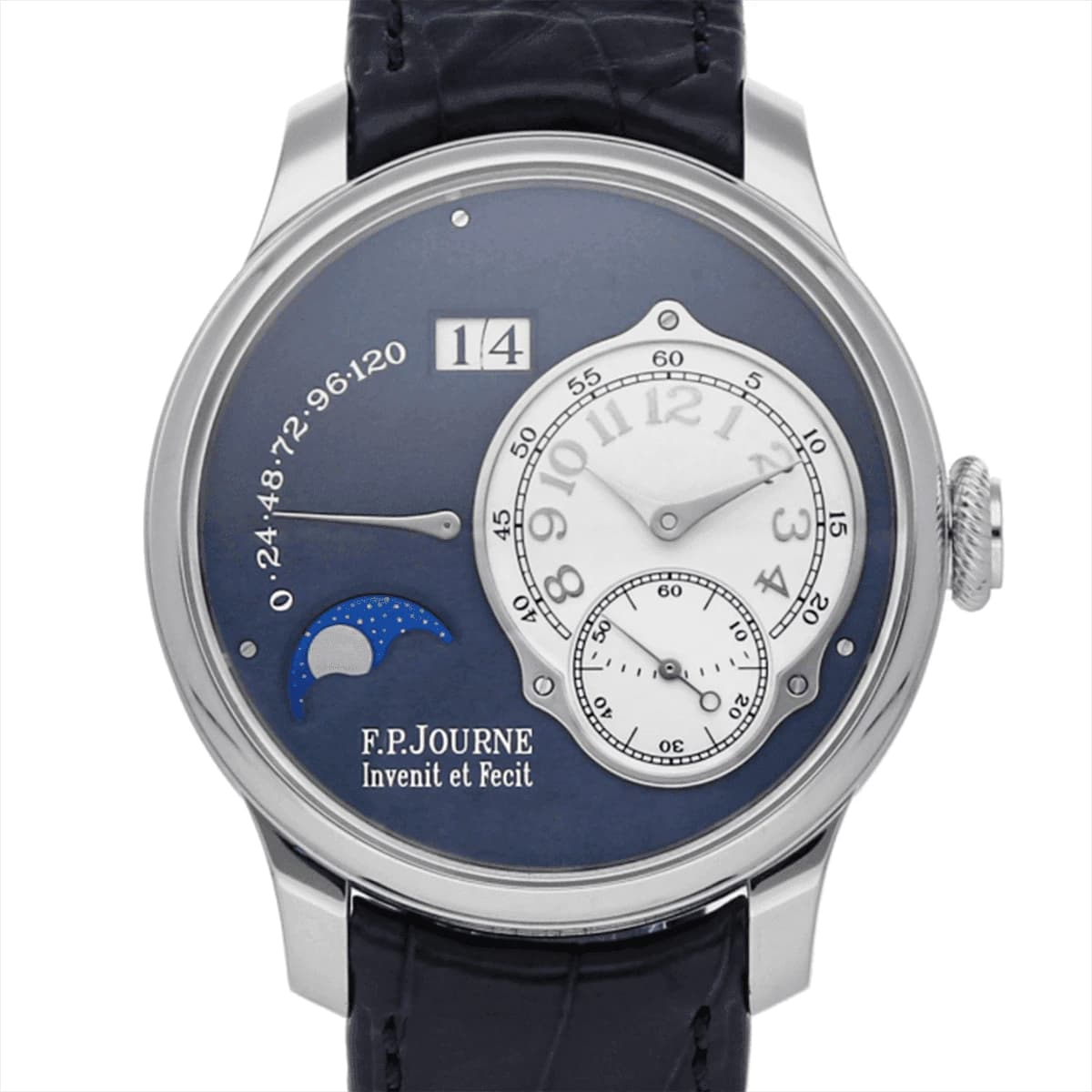
Third generation of the Octa Lune (2015–present)
The third and current generation was introduced in 2015, when François-Paul Journe unveiled an entirely new version featuring a redesigned dial. At the same time, the model’s name was changed, dropping the word “Octa” to become simply the “Lune”.
That same year, the model was awarded second prize at the “Watch of the Year” awards held in Geneva.
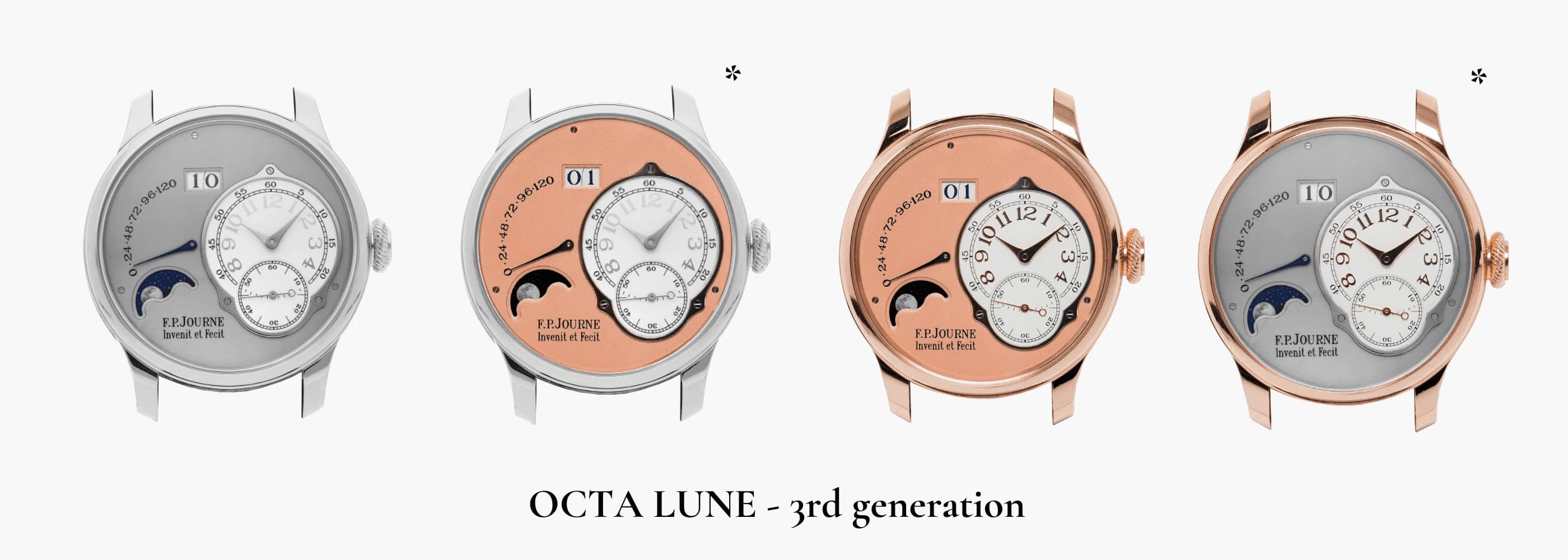
The asterisks shown in the photo above indicate possible combinations (photomontages) that we have yet to observe.
The cases are now available in 40 mm or 42 mm diameters, in response to customer demand. The materials remain identical to those of the previous generation, as does the unchanged calibre 1300.3—and it is easy to understand why when François-Paul Journe states: “[this calibre] is an accomplished movement that requires no further modification due to its almost unreal performance.”
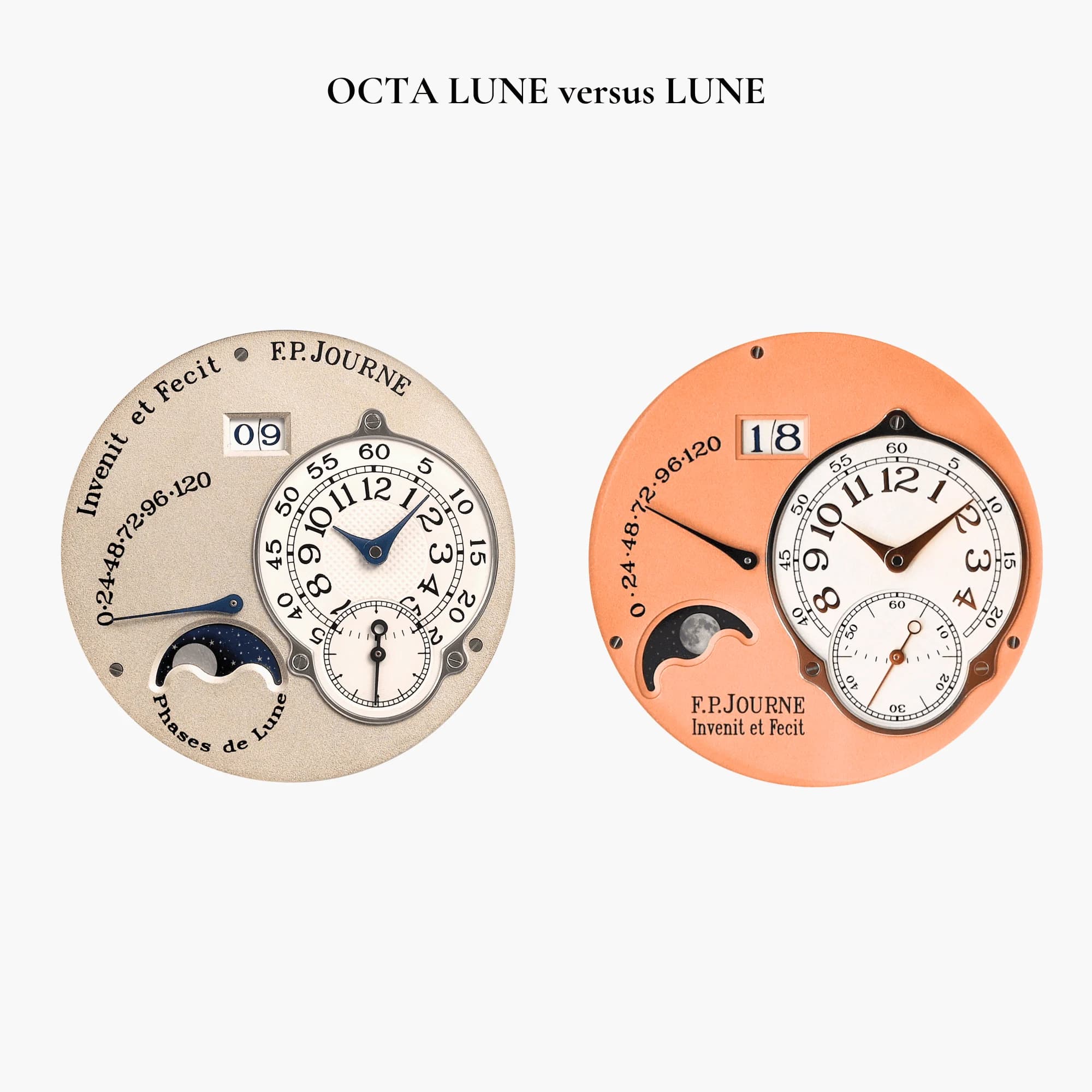
However, numerous changes were introduced, particularly to the dial:
- the serial number now ends with “LN” (for *Lune Nouvelle*);
- the brand name and motto were moved to 7 o’clock;
- the words “Phases de Lune” disappeared;
- the moon phase display was raised and shifted to the left;
- the power reserve indicator was moved slightly upwards;
- the date window is now wider;
- the minute numerals were reduced in size, improving the overall legibility of the dial;
- the hour numerals are no longer painted but engraved using a diamond-tipped tool.
To this day, the model remains part of the F.P. Journe catalogue.
A few exclusive Octa Lune models
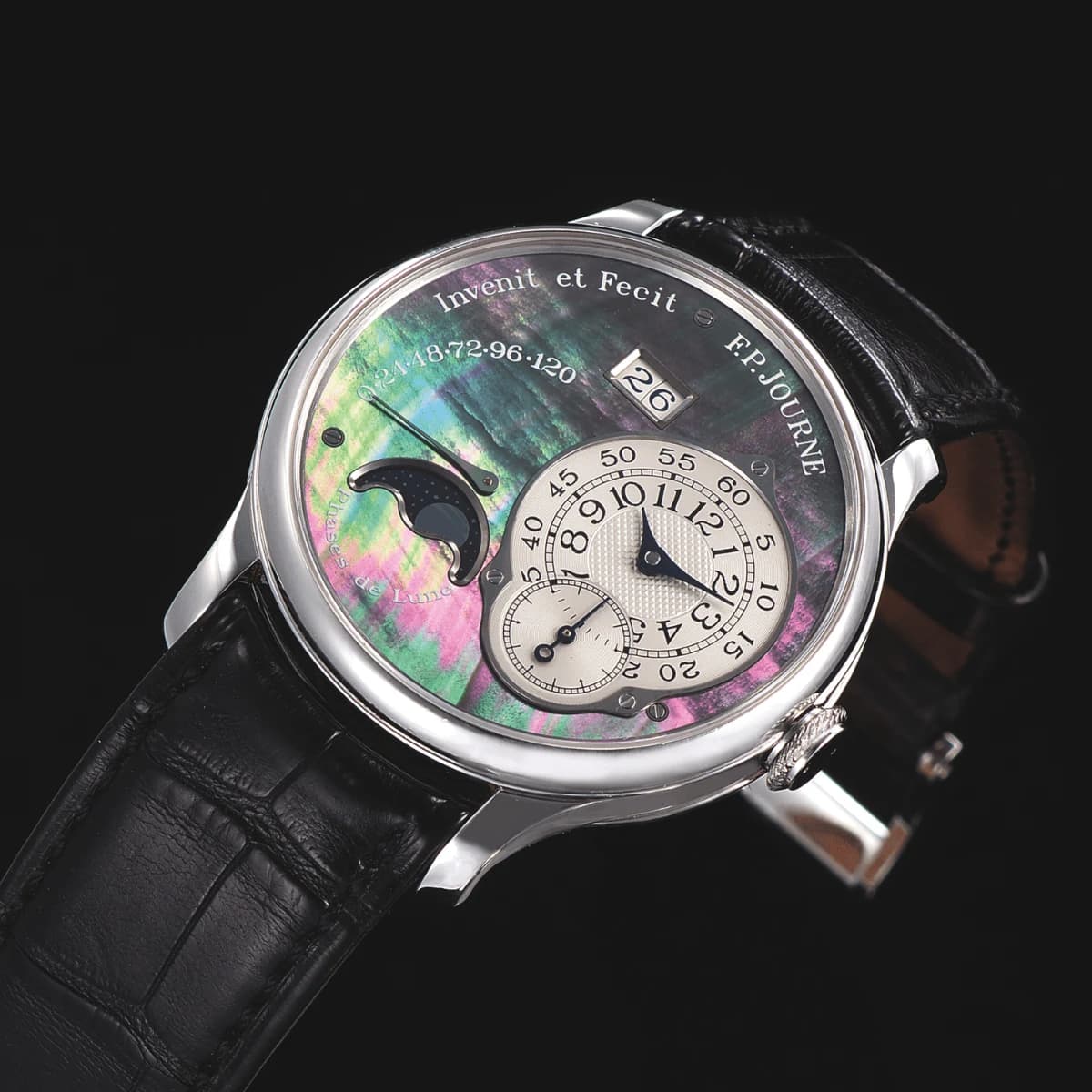
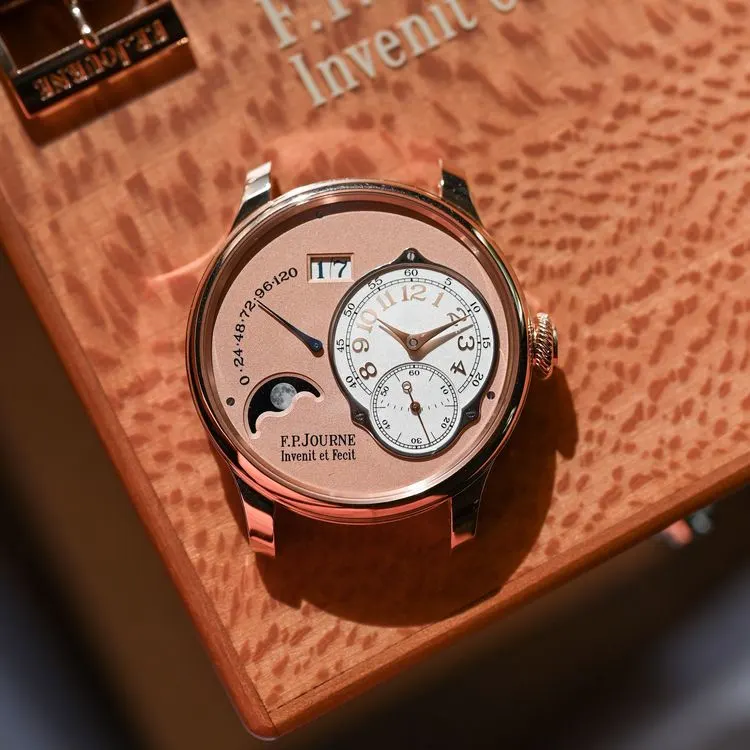
Beyond the configurations mentioned above, F.P. Journe also produced a small number of extremely rare models featuring “coloured” dials.
Carefully researched and written, this article is not intended to be exhaustive, and we will continue to update and correct it over time.
Our thanks to The Journe Guy, Christie’s, Phillips, Sotheby’s, Antiquorum and A Collected Man for the images available online.