41WATCH has surrounded itself with the safest and fastest providers to transport the most precious goods. Delivery is insured and secure.
All our watches are guaranteed to be 100% genuine.
All our watches have been inspected and appropriately serviced by our in-house watchmakers and are guaranteed for one year.
41Watch has established privileged partnerships with financial providers to offer you taylor made financing solutions.
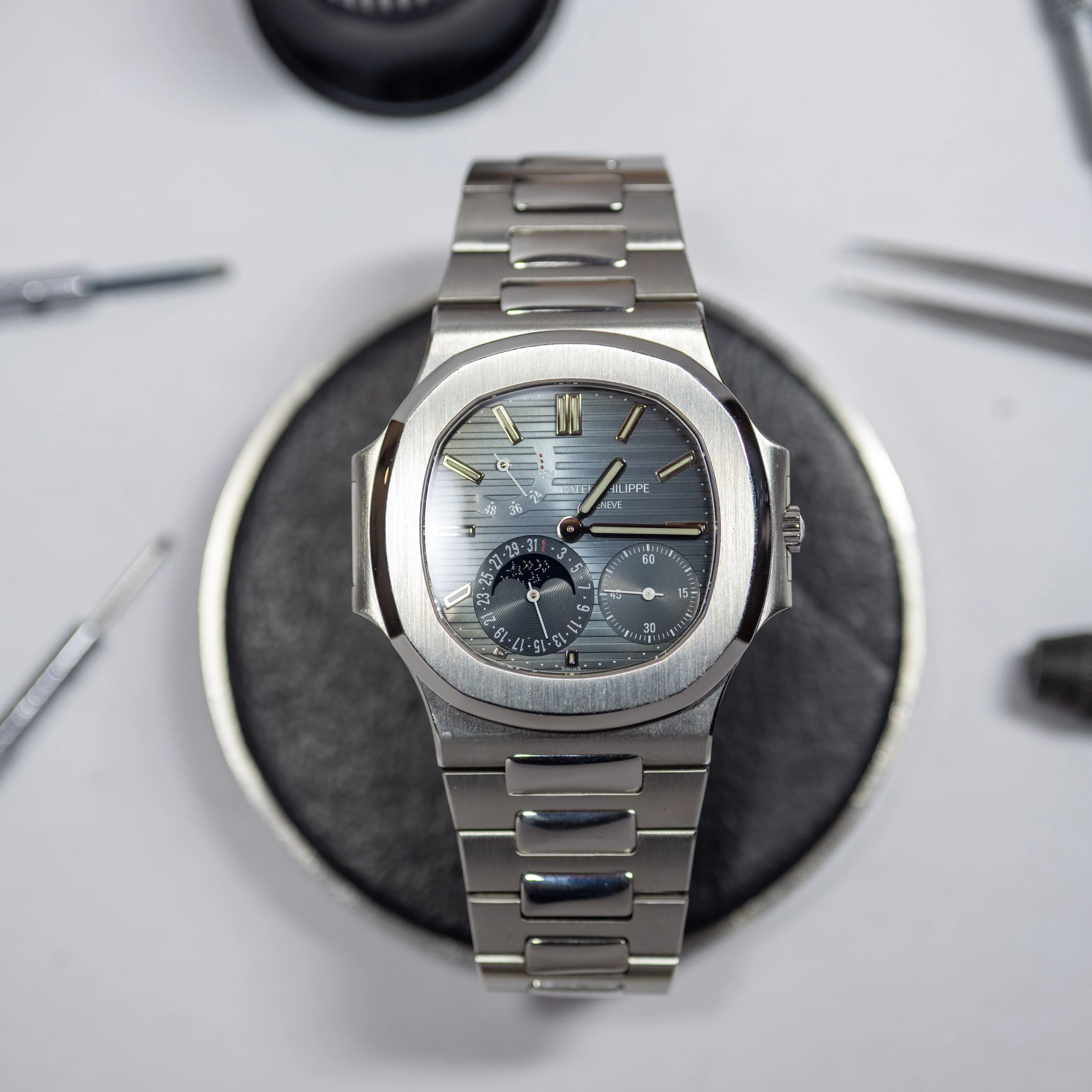
Patek Philippe Nautilus 3712: Complete Review and Buying Guide
6 min read


Launched in 1976, the Patek Philippe Nautilus was born from the pencil of Gérald Genta with the reference 3700, displaying hours, minutes, and date. We will not revisit the importance the Nautilus has had on the world of modern watchmaking, as the subject has already been covered in a previous article.
What should be remembered about the Nautilus is that it is probably the model that contributed most to the fame of Patek Philippe beyond seasoned collectors. The idea of producing and marketing a luxury sports watch in steel was, in retrospect, a stroke of genius that opened new horizons for many high-end manufactures (while acknowledging the pioneering move by Audemars Piguet with the launch of the Royal Oak in 1972, also designed by Gérald Genta).
Over time, the Nautilus collection—still thriving today—has expanded with numerous variations, playing with different sizes, materials, and complications. The reference 3712 undoubtedly stands out as one of the most intriguing, rare, and interesting models for collectors. The 3712 is the first Nautilus to feature multiple complications (date with power reserve and moon phases). To be entirely precise (and to anticipate comments from our well-informed readers…), the first Nautilus with a complication was the reference 3710, featuring a power reserve indicator, introduced in 1998/1999. That said, it is fair to admit that this model has little in common with the level of complications offered by the 3712.

Produced only in 2005, the reference 3712 was quickly replaced in 2006 by the reference 5712, reflecting a desire to expand the collection with new variations (the 5711, the 5980 chronograph, and the 5712 with power reserve).
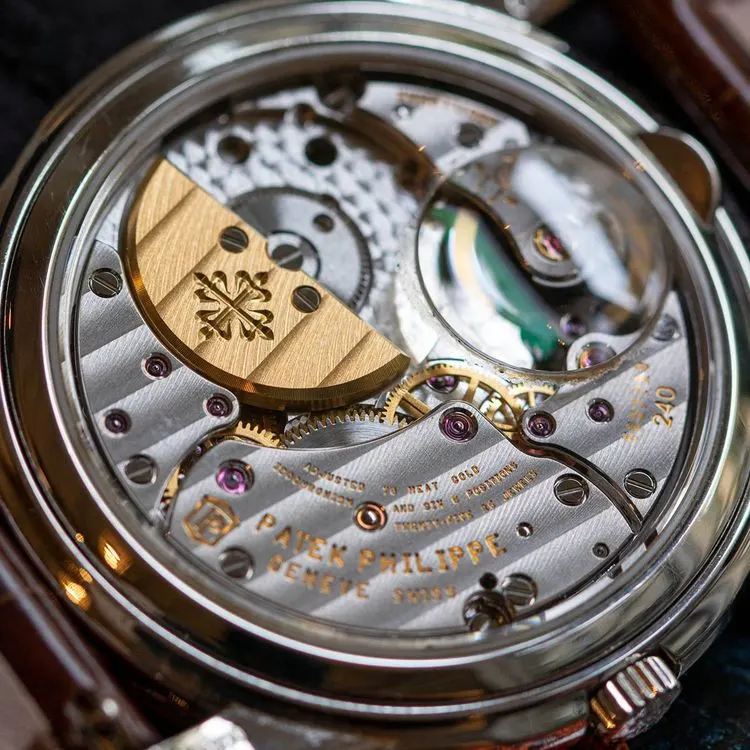
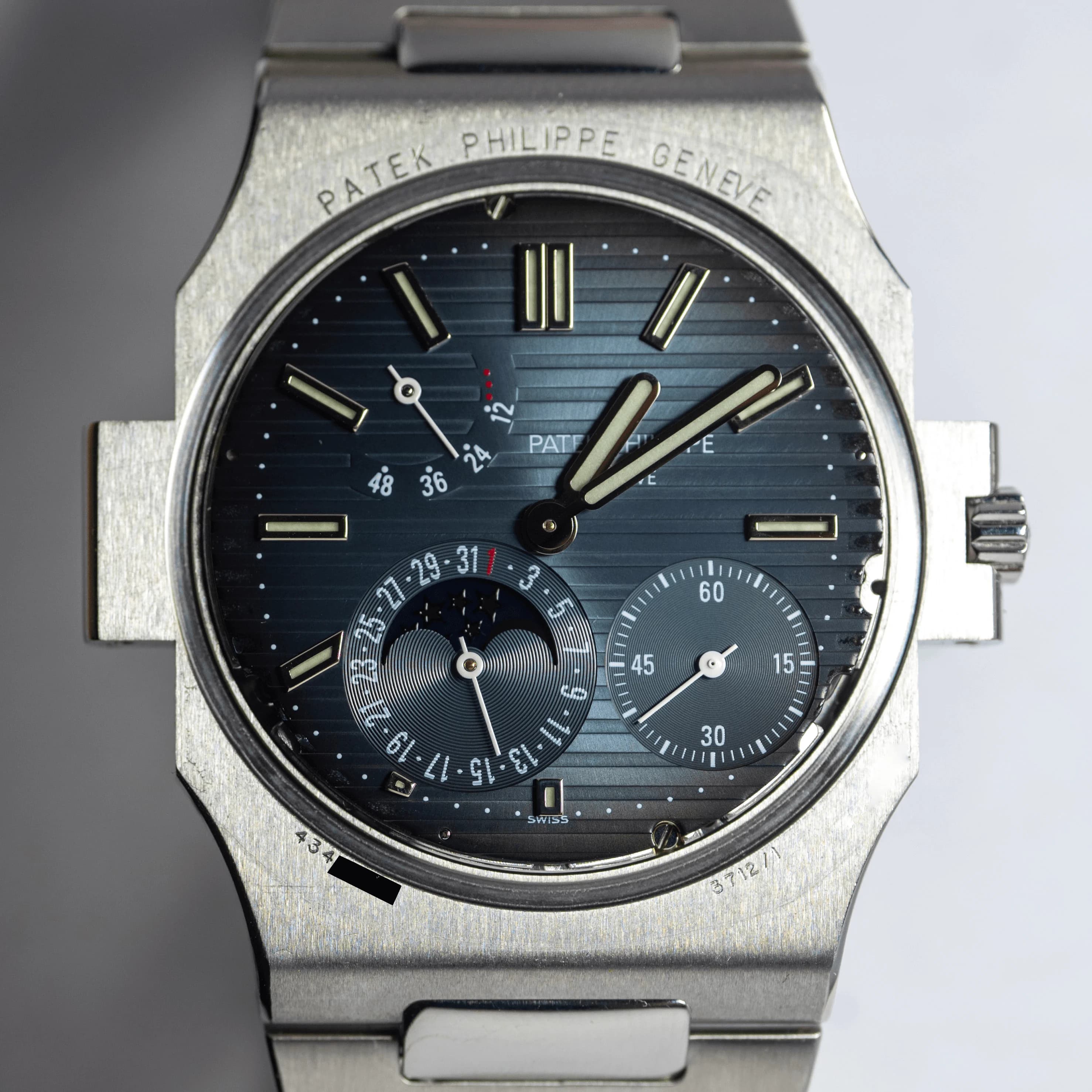
The 3712 appealed to enthusiasts thanks to its relative simplicity—featuring a thin and discreet case—while integrating several complications (power reserve, calendar, small seconds, and moon phases). The extra-thin case of the 3712 is indeed a watchmaking achievement, made possible by the use of the legendary in-house calibre 240, found in many collections since the 1970s.
We do not know why there was such haste in replacing the 3712, whose production lasted only a few dozen months (it likely began in 2004 in order to present the model at Basel in 2005, and ended in early 2006). On the other hand, the simultaneous launch in 2006 of the 5711, the 5712, and the 5980 is perfectly logical, as these three watches share many common elements. The 3712 can therefore be seen as a testing ground—something of a precursor to the modern Nautilus models we know today. It can also be considered a transitional model.
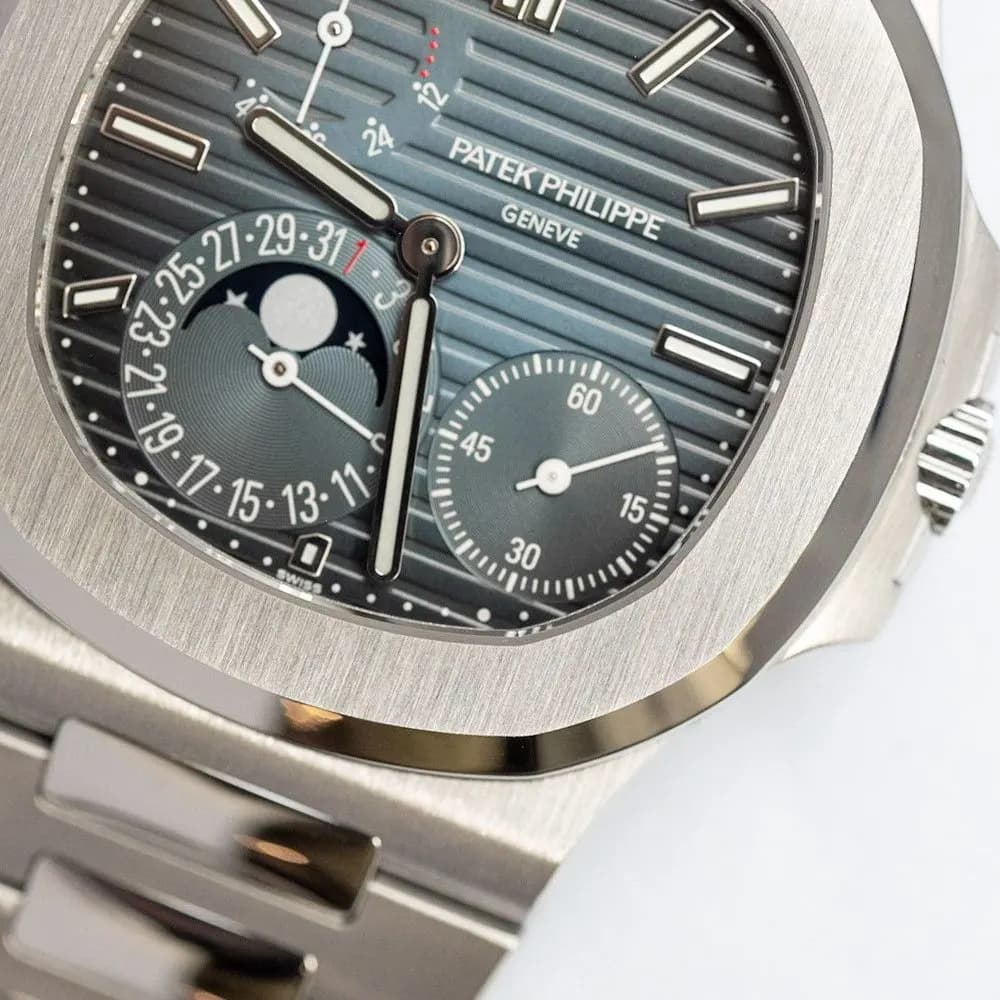
The 3712 stands out for subtle details that only a trained eye will notice—or truly appreciate—at first glance. The dial of the 3712 is something to be savored, with a number of small refinements recognizable mainly by connoisseurs.
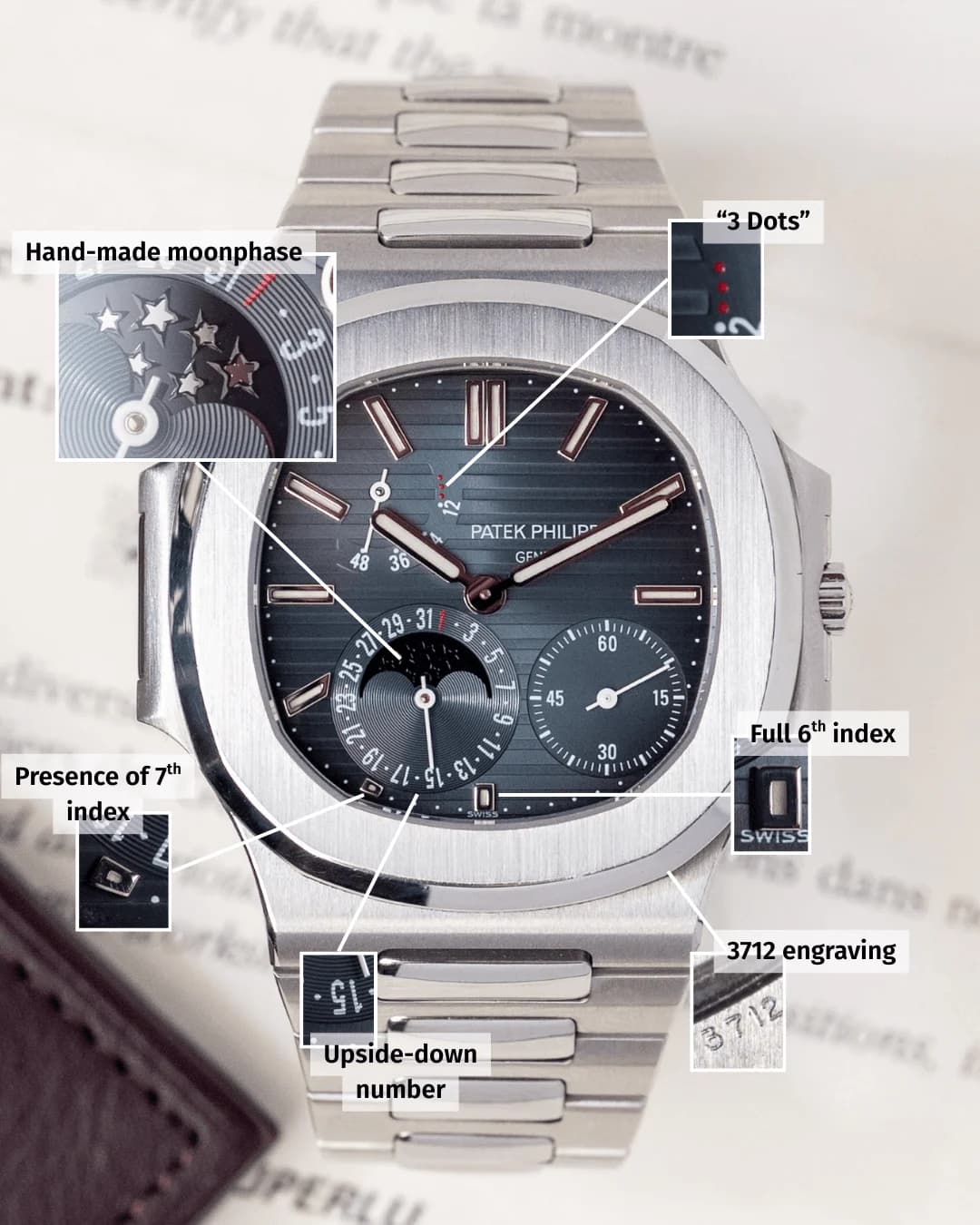
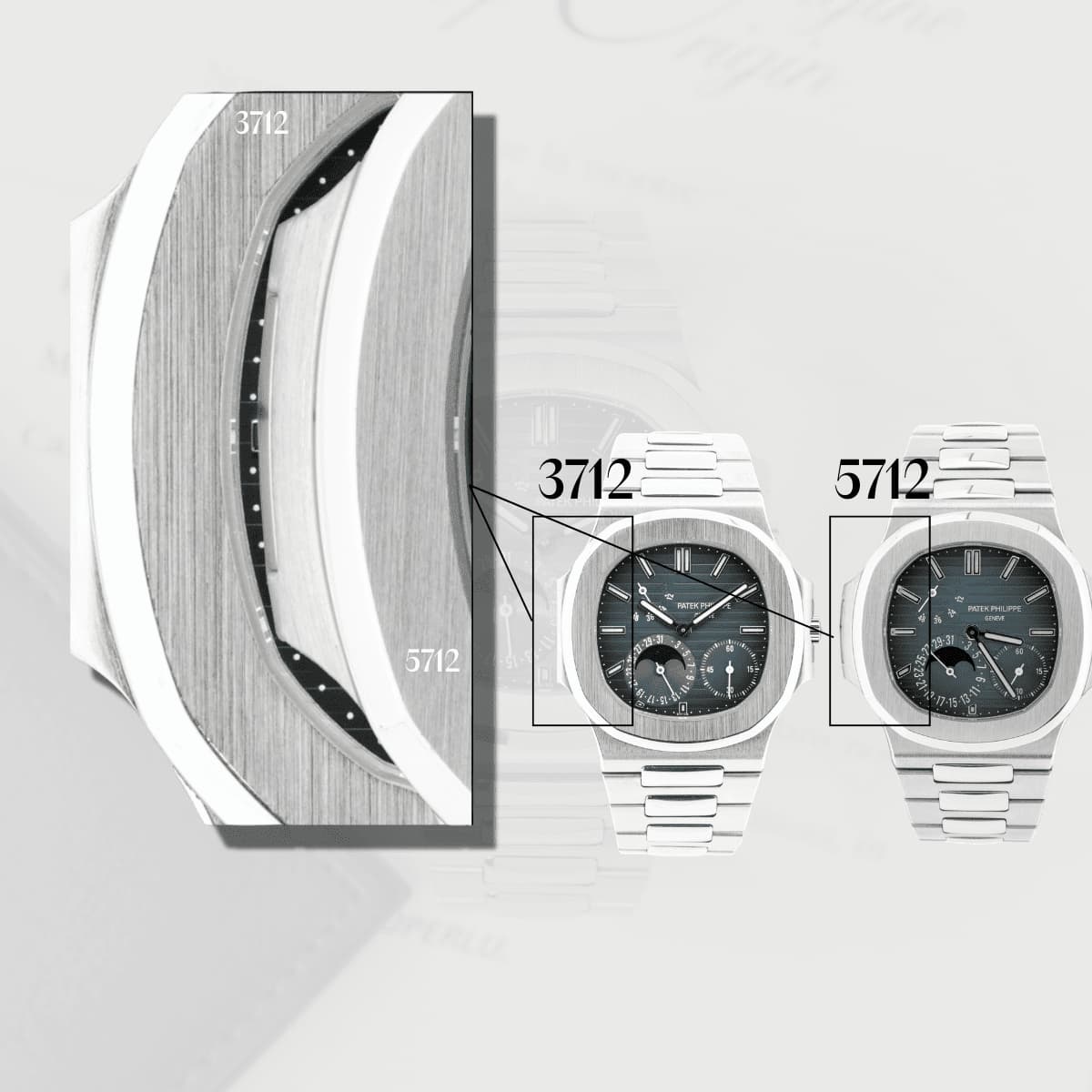
For example, the 6 o’clock index (located above the “Swiss” inscription) is not cut into a half-moon by the small seconds subdial. On the 5712, however, the 7 o’clock index disappears completely from the dial—something that collectors consider one of the key distinctions between the two models.

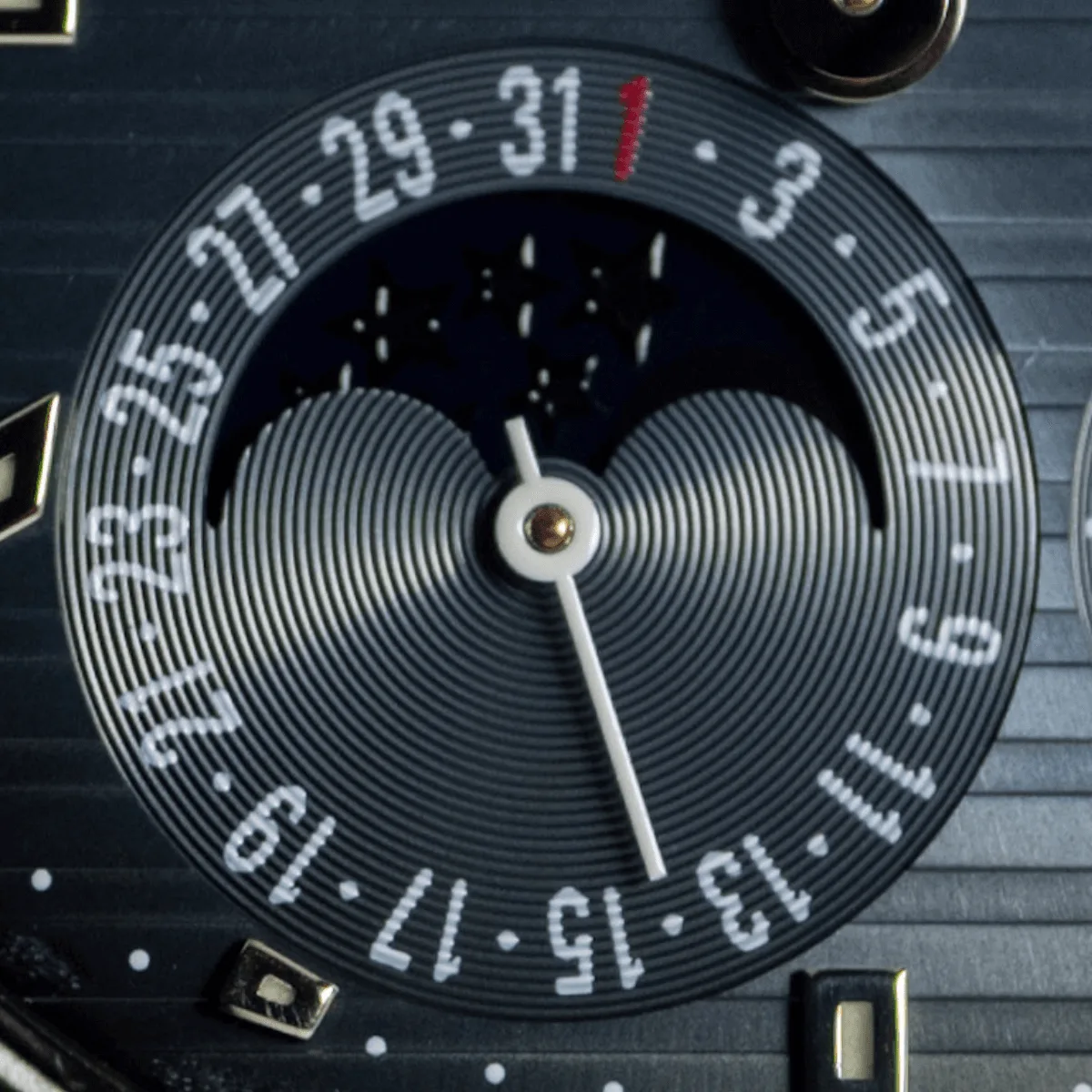
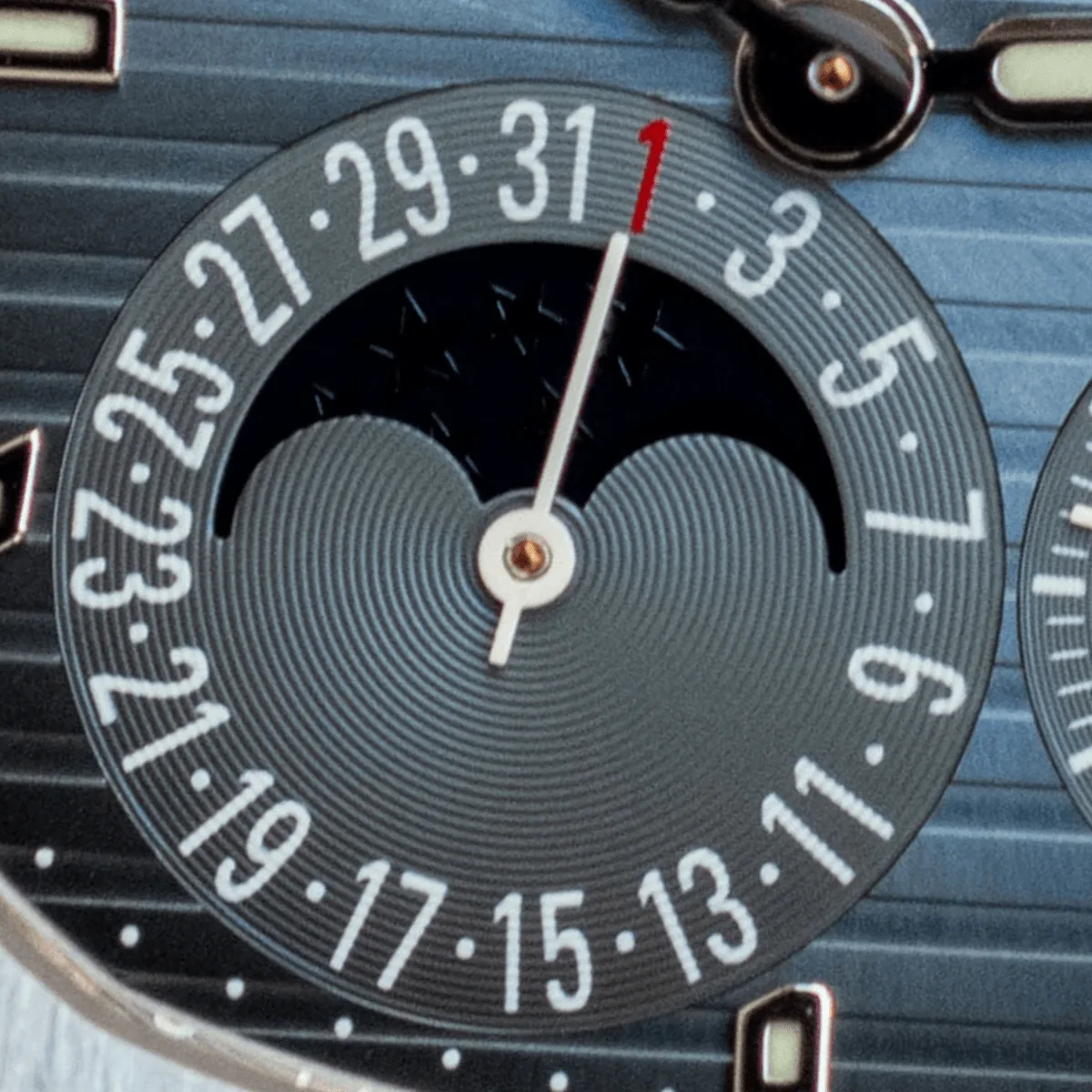
Among the other subtle details, one can notice the “reversed” date display between 9 and 21 on the 3712. This is no longer the case on the 5712, where legibility was improved through a clearer positioning of the numerals, along with a slightly larger—and therefore more readable—date subdial.
A final point of distinction between the two models lies in the moon-phase display: on the 3712 it reflects a more artisanal approach (with multiple layers of depth and hand-finished execution), whereas the moon phase on the 5712 feels more industrial in its construction.
The devil is indeed in the details.


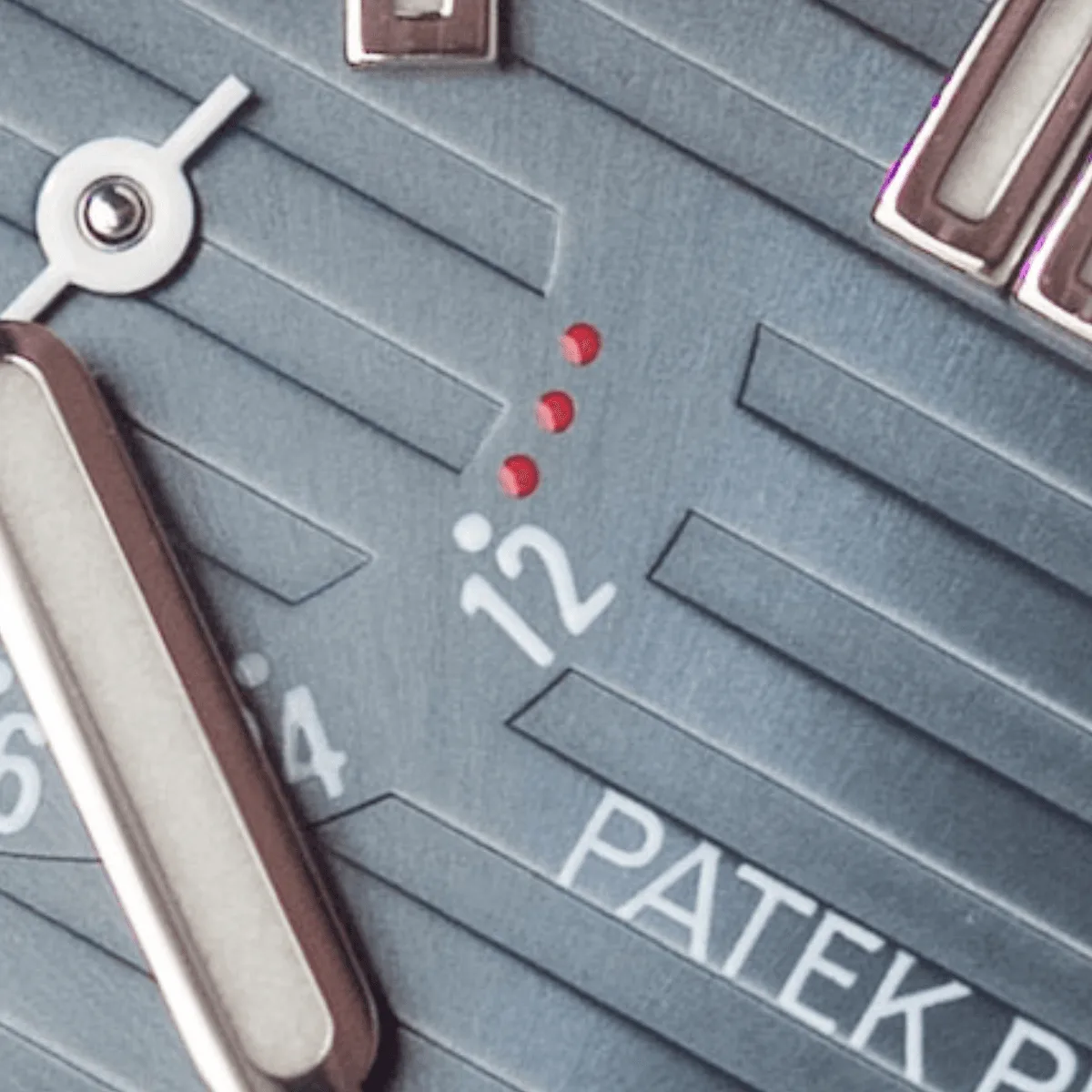
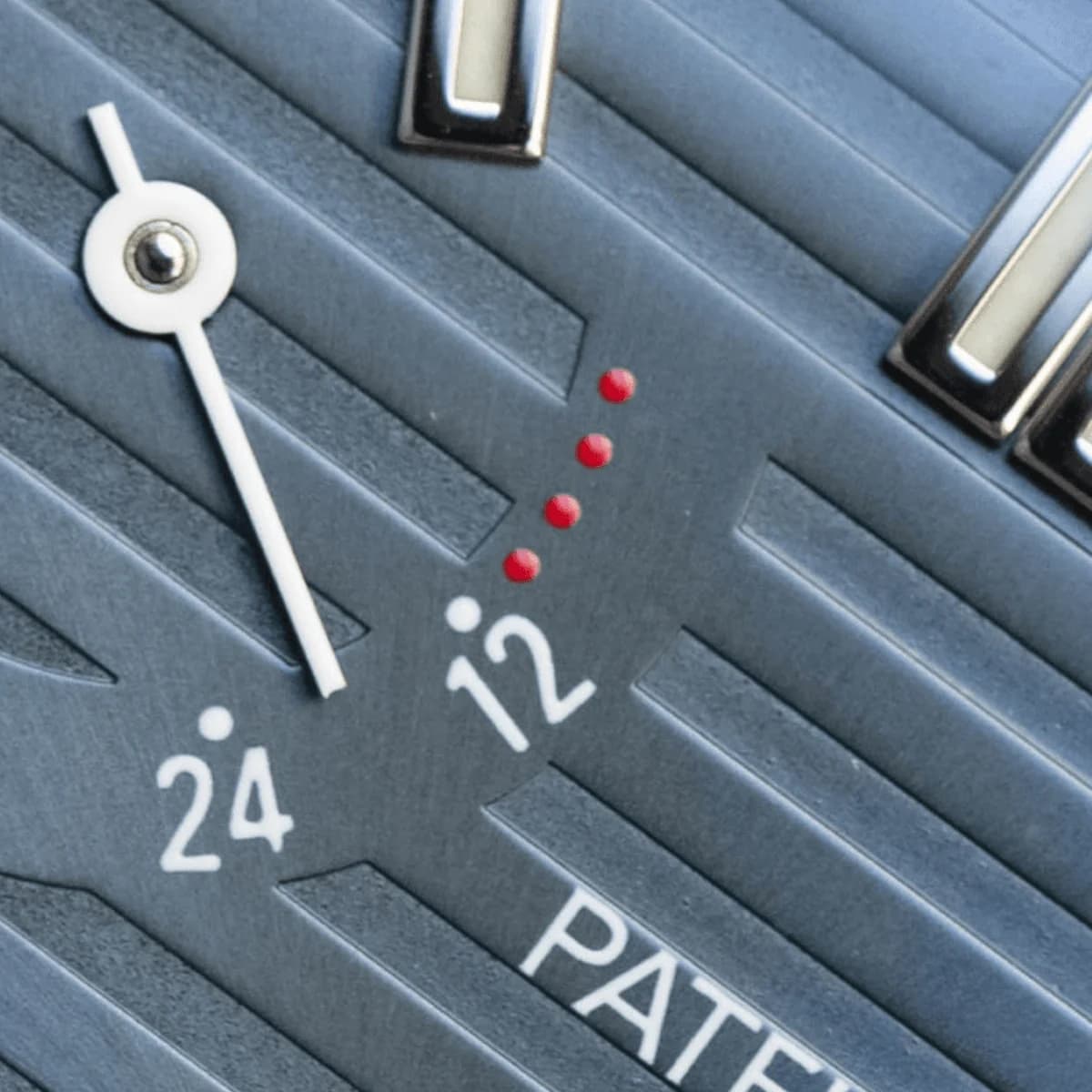
Although the Nautilus reference 3712 was produced for a very short period, its production can be divided into two versions, identifiable by the red dots indicating a low power reserve. On the first version, the low power reserve is signaled by three red dots, while the second version features a fourth red dot.
There is no official literature from Patek Philippe on this subject, but collectors generally agree that the “3 dots” version was likely produced in greater numbers than the “4 dots” version. That said, this subtle distinction remains purely aesthetic and has no other impact of any kind. There are no other differences between the Mark I and Mark II dial versions of the 3712.


Within our team, opinions differ on whether the Mark I or Mark II dial is preferable, and we would be hard-pressed to settle the debate… what about you, which one do you prefer?
It is worth noting that the 5712, the successor to the 3712, features four red dots on the dial to indicate a low power reserve. This kind of detail—sometimes referred to as a small “quirk” or refinement—perfectly illustrates what makes the world of watch collecting so fascinating… a world full of subtleties.
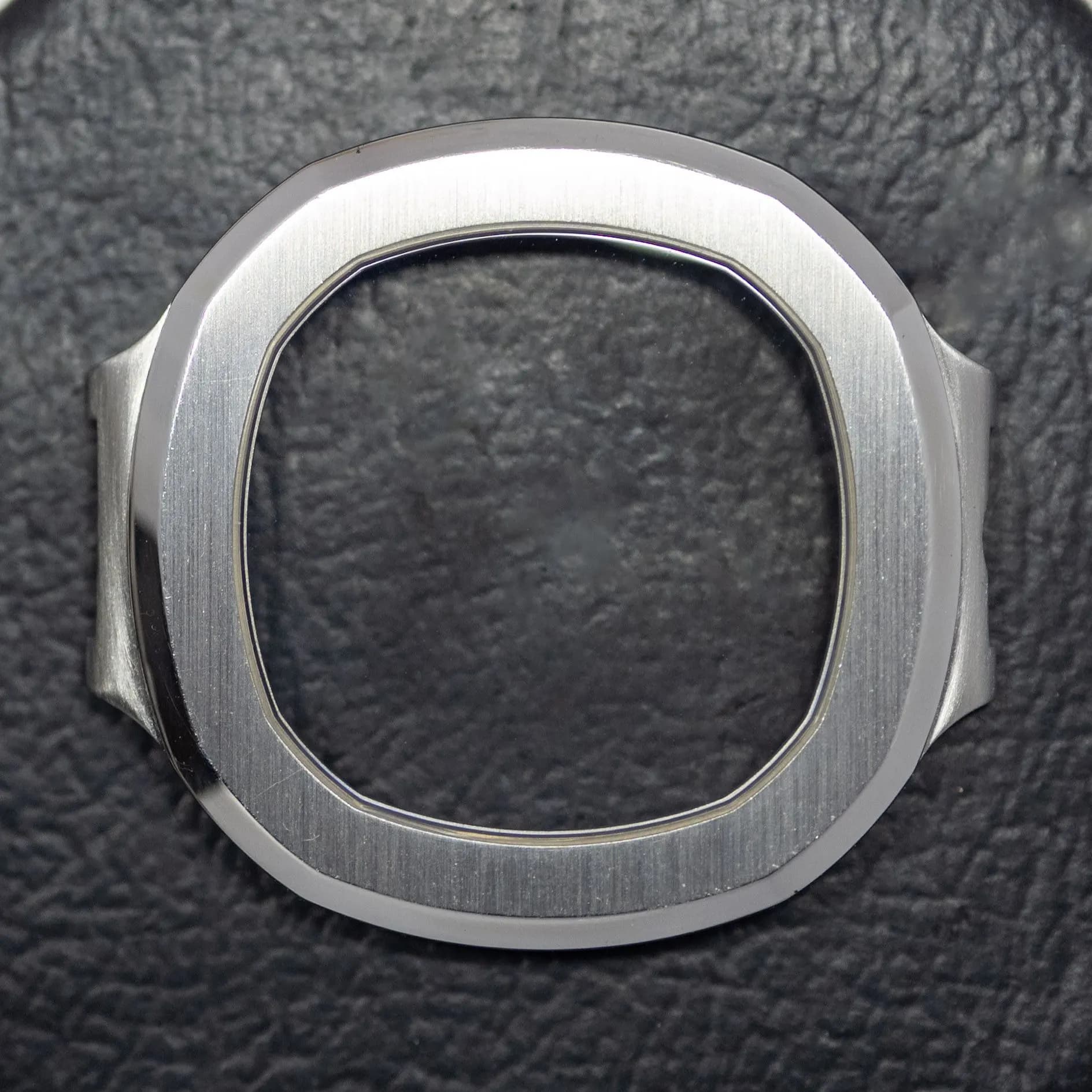
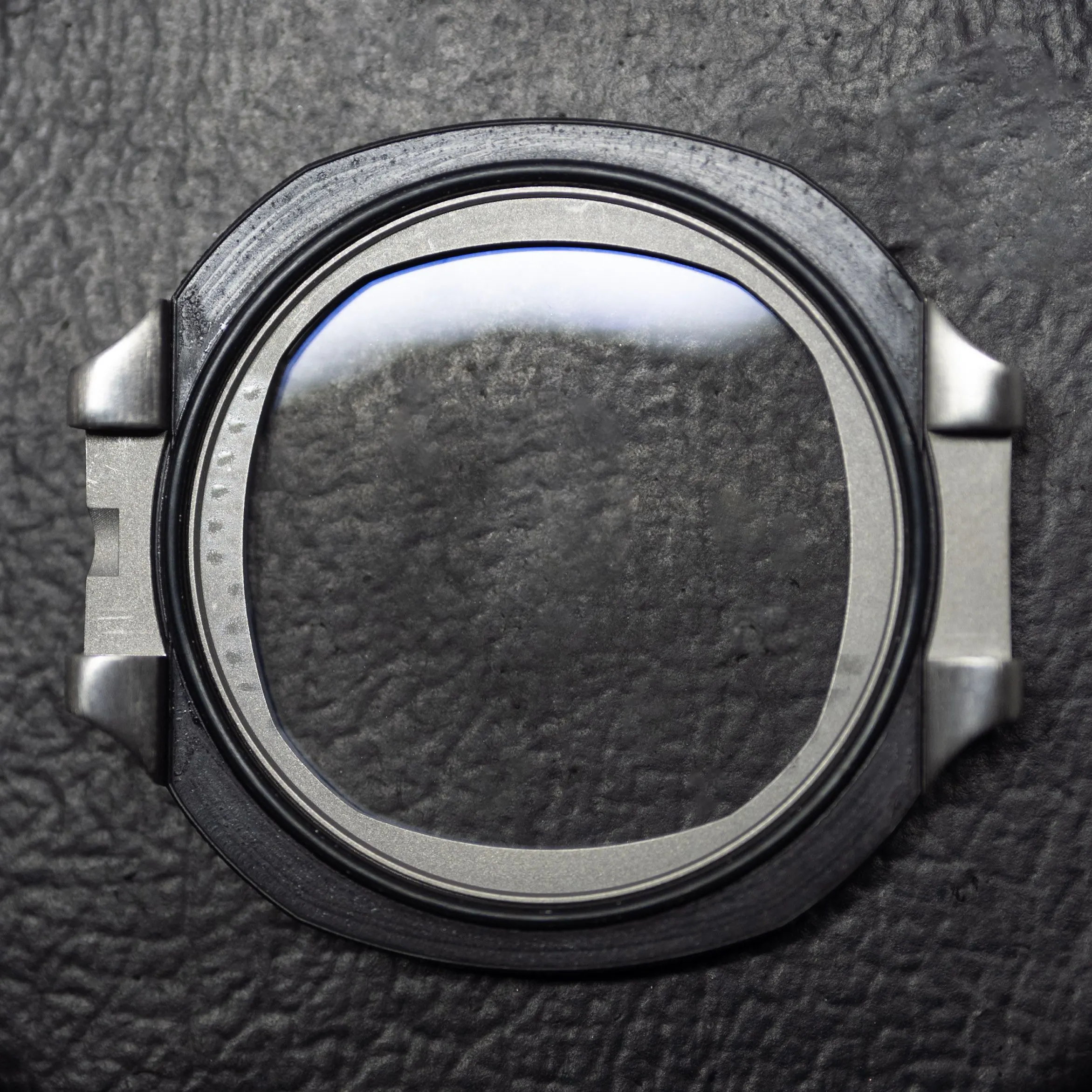
The 40 mm case of the 3712 is a so-called monobloc case, built in the same way as that of the 3700, meaning that the case middle and the caseback are integrated into a single piece. The crown is push-down, meaning it is not screw-down.
It is also worth noting that the case number is only visible once the bezel has been removed, stamped in the lower-left corner of the case.


The construction of the monobloc case differs from that of the 5712, which features a more modern three-piece case construction, the configuration adopted for contemporary Nautilus models.
The bezel, meanwhile, sits directly on top of the case. It is also worth noting that its characteristic “ears” are straight rather than rounded, unlike those of the Nautilus 5712. This is generally the collector’s trick for instantly distinguishing a 3712 from a 5712.

The collector’s tip: The last three digits of the serial number are usually stamped inside the bezel. However, this feature is not systematic across all Nautilus models: the 3712 does not have it, unlike references such as the 3700 or 3800.
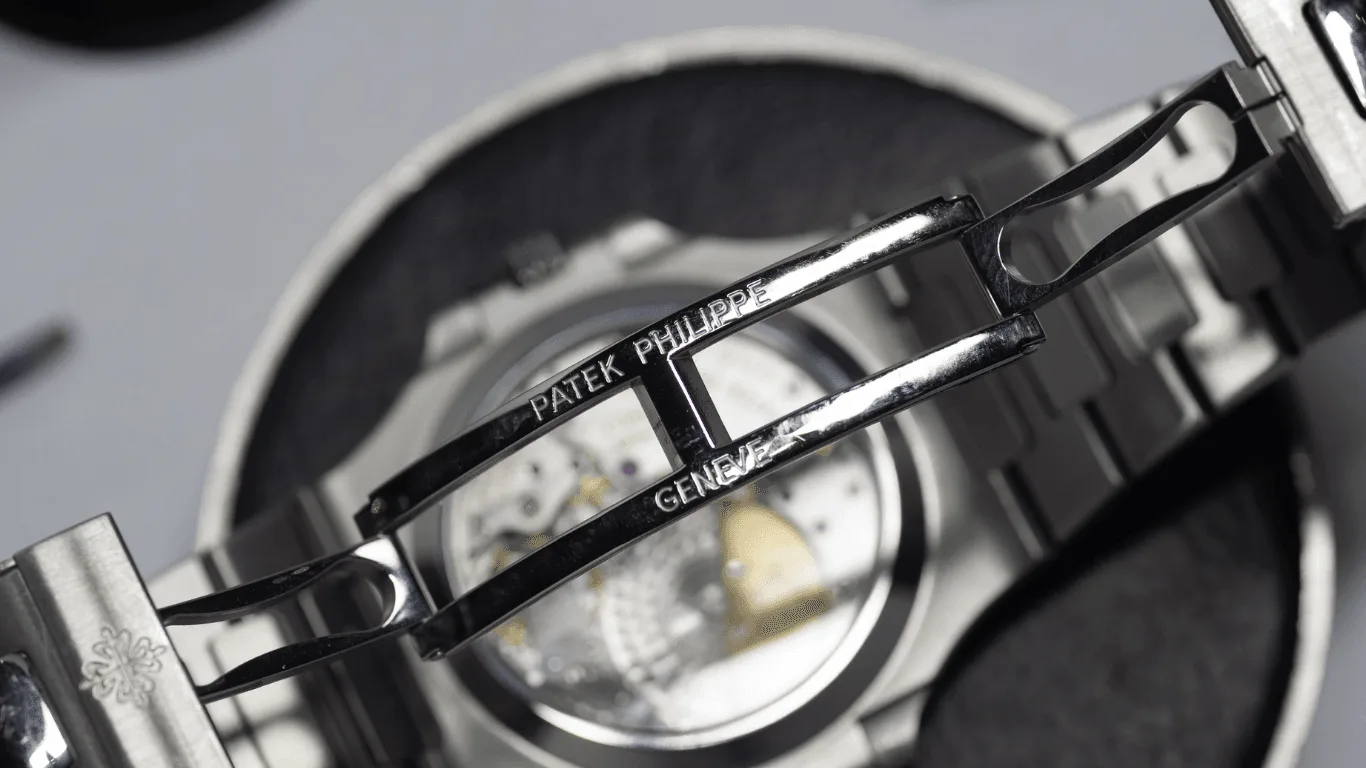
The bracelet features a double-folding clasp introduced in the late 1990s, often seen as a replacement clasp on the very first Nautilus reference 3700. Long criticized for its stiffness when opening, newer generations of the Nautilus now feature a butterfly-style double-folding clasp, which is far more comfortable (and perhaps a little less charming?).

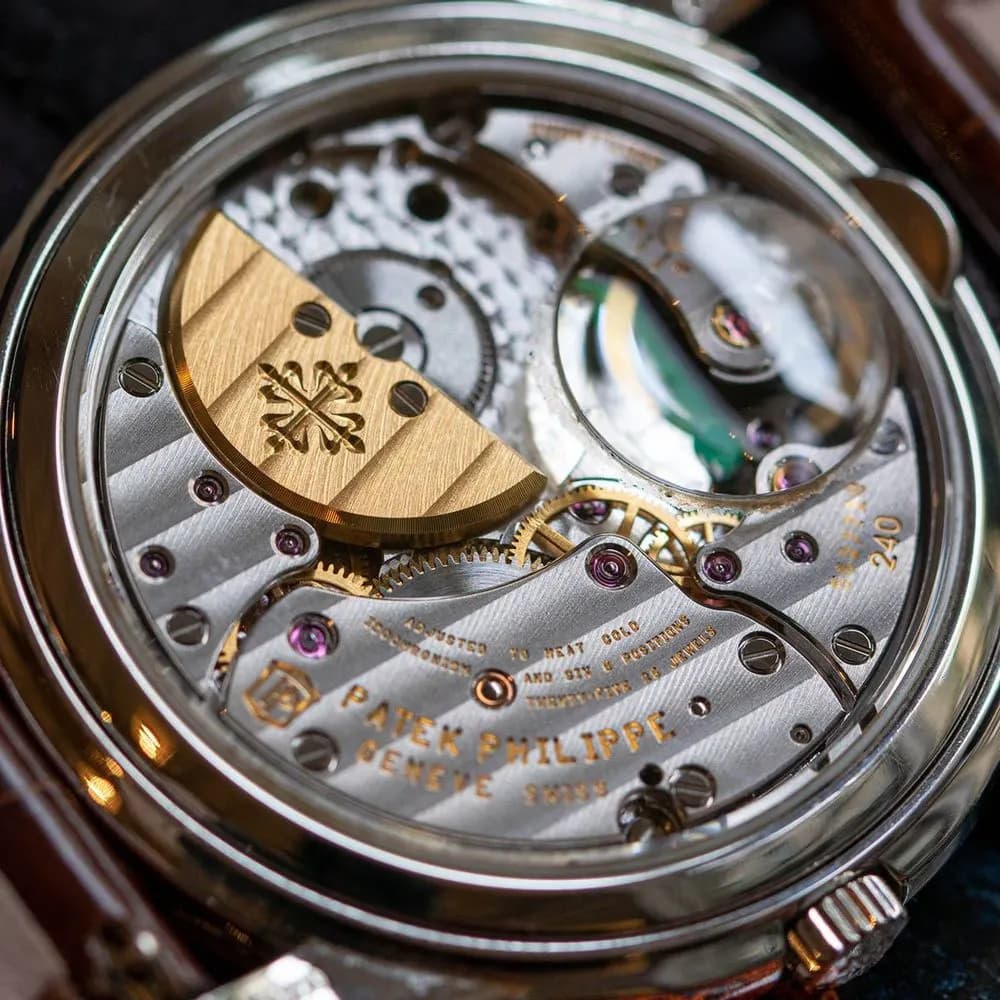
Automatic | 22k gold micro-rotor | 21,600 vph frequency | ~48-hour power reserve | ~3.98 mm thickness
Introduced in the 1970s with the Ellipse collection, the calibre 240 is shared across no fewer than five different collections. Its first appearance in the Nautilus line came with the Nautilus 3712. To this day, it is still used within the Nautilus collection in the ref. 5712, as well as in the Nautilus Perpetual Calendar ref. 5740G. The calibre 240 can also be found in the brand-new Cubitus collection, further proof—if any were needed—that a movement more than 60 years old has not aged a day.
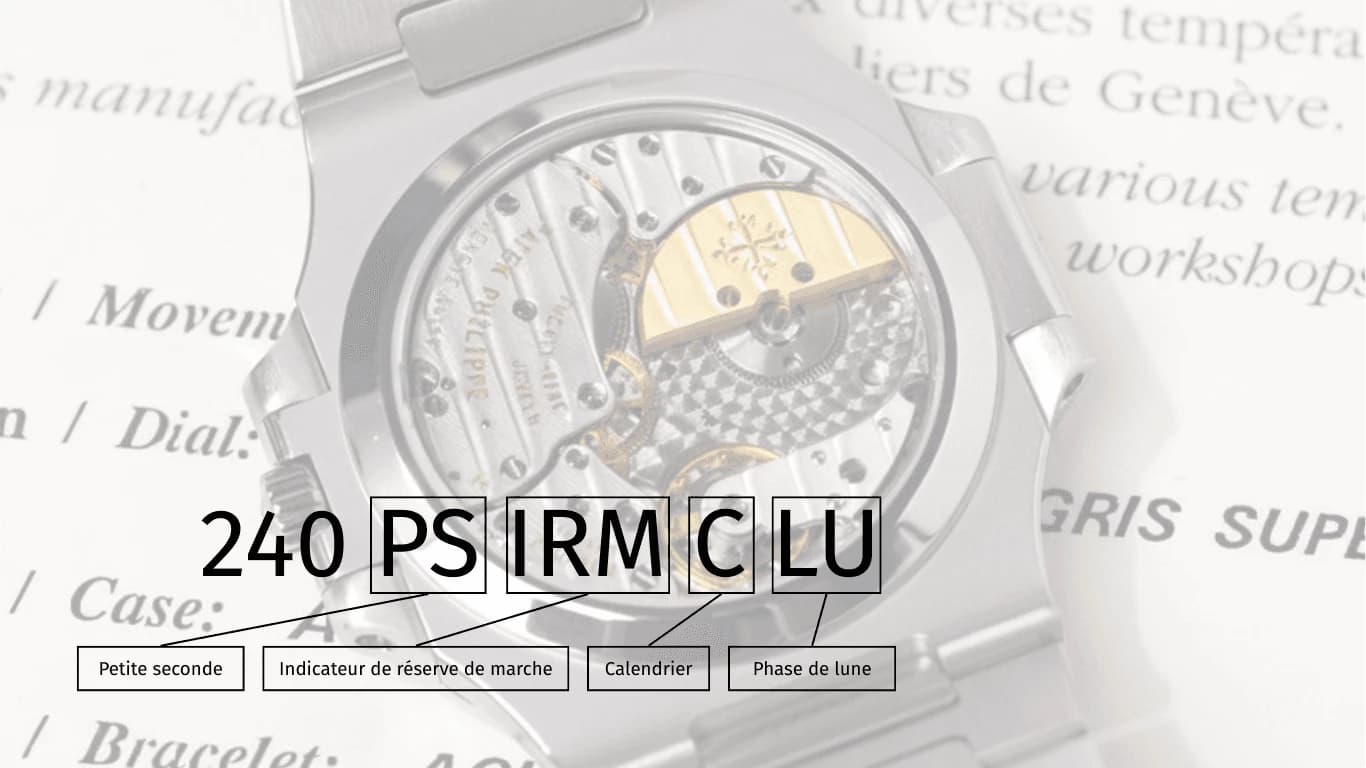
The Patek Philippe calibre 240 PS IRM C LU is therefore an adaptation of the calibre 240 featuring the following complications: PS (small seconds - "Petite Seconde"), IRM (power-reserve indicator - "Indicateur de Réserve de Marche"), C (calendar - "Calendrier"), and LU (moon phases - "Phases de lune").

The Nautilus 3712 is a relatively thin watch, but its 40 mm case can make it feel somewhat substantial on smaller wrists, which might be better suited to a mid-size model such as the Nautilus 3800. The reference 3712 nevertheless remains a very elegant and masculine watch. The Nautilus bracelet fits the wrist perfectly, and its extra-thin case makes it extremely comfortable to wear. The watch also slips easily under a shirt cuff—something that is not always the case with the Nautilus Chronograph ref. 5980, the Travel Time ref. 5990, or even the Annual Calendar ref. 5726.
As noted earlier, the clasp can feel a bit stiff when opening, although it is not particularly uncomfortable. There is also the perennial debate regarding the dial’s legibility, which some may find somewhat “busy” and, in any case, not entirely “logical” in its layout. From our perspective, however, it is precisely this unconventional dial that gives the watch its personality and makes it impossible to ignore.
In short, the 3712 is very pleasant to wear, perfectly versatile, and consistently elegant.

It is relatively easy to argue that the Nautilus 3712 is one of the icons of the Nautilus range—and of Patek Philippe in general—if only because of its extremely limited production, estimated at around 1,000 pieces over a very short period of time. The 3712 is all the more interesting as it represents the first Nautilus to feature multiple complications.
As for pricing, one should expect a sometimes significant premium compared with the 5712. It can also be argued that when the price gap between a 3712 and a 5712 begins to narrow on the market, it may well be the right time to consider investing in a 3712.
Regarding the choice between a “3 dots” and a “4 dots” version, we prefer not to take sides in the debate. It ultimately comes down to personal taste—much like choosing between a black-dial Daytona or a white-dial Daytona.
Today, the 3712 sits on the boundary between a modern and a vintage watch, and it is also a model filled with history.
By now you’ve probably guessed: the entire 41Watch team are unconditional fans of the 3712.